The Science of Self-Control — It's Not Willpower, It's What the Marshmallow Test Actually Found
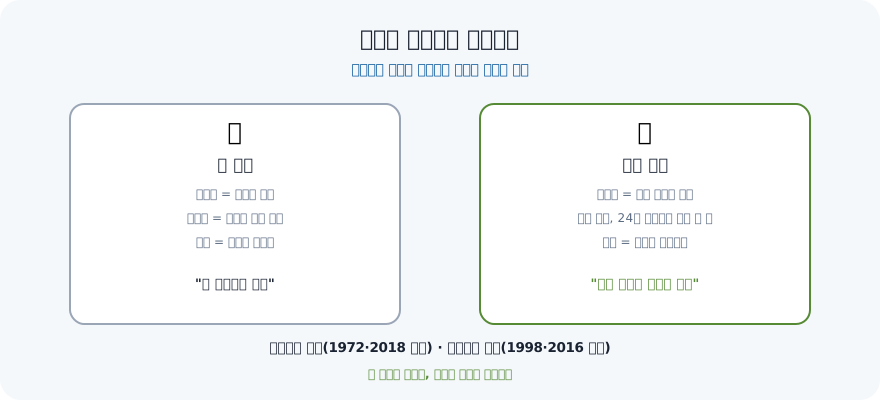
"I guess three-day quitting keeps happening because my willpower is weak." Ask most people why their plans collapse and they'll answer their own question before you finish asking. The two studies most often cited as proof — the marshmallow test that measured patience, and the theory that pictured willpower wearing down like a muscle — have both wobbled under large-scale replication over the last decade. If the two pillars that explained self-control turned out to be shakier than we thought, the conclusion "I just don't have the willpower" deserves a second look too. 🌱
Key takeaways
- The Stanford marshmallow test (1960s–70s, Walter Mischel) became the go-to evidence that "the ability to wait predicts future success"
- A 2018 replication by Tyler Watts's team at Columbia found that once family background was controlled for, that predictive power dropped to less than half
- Ego-depletion theory (1998), which pictured willpower as a muscle that wears out with use, found no significant effect in a 2016 pre-registered replication across 24 labs
- The real variable wasn't the total amount of willpower — it was how trustworthy the environment felt
- Self-control looks less like the strength to endure and more like design that reduces how often you need to endure anything
- Perfectionism — turning one bad day into total failure — undermines follow-through far more than willpower ever depletes it
What the marshmallow test was believed to show
In the 1960s and '70s, Stanford psychologist Walter Mischel sat four-year-olds down in front of one marshmallow and made them an offer: eat it now, or wait about 15 minutes until he came back and get two. In a 1990 follow-up, the kids who waited longer turned out to have higher SAT scores and better-rated social skills as teenagers. That correlation got popularized into a single message — "a child's patience predicts a lifetime of success" — and it's been a staple of self-help books ever since.
2018: the finding got cut in half
A 2018 replication published in Psychological Science by Tyler Watts, Greg Duncan, and Hoanan Quan re-ran the question with a much larger, more representative sample — roughly 900 children, far more than the original. The result was different. Once the researchers statistically controlled for parental education and income, the correlation between waiting time and later achievement dropped to less than half the originally reported figure. Among children from lower-income households specifically, the predictive power all but disappeared. In other words, a large share of what looked like "patience" was tangled up not with a child's innate temperament, but with how stable the environment they grew up in was.
Why some kids waited longer — a question of trust
One study dug deeper into exactly this. In 2013, Celeste Kidd's team at the University of Rochester split children into two groups before running the marshmallow test. One group had an experimenter keep a small promise (more crayons, as promised); the other had the experimenter break it. When the same marshmallow test followed, the children who'd learned promises get kept waited, on average, nearly four times longer than the group that hadn't. A large part of the ability to wait wasn't willpower — it was trust that waiting would actually pay off.
Why ego-depletion theory collapsed
The other pillar that explained self-control was ego depletion, a theory proposed in 1998 by psychologist Roy Baumeister's team. It pictured self-control as a finite resource that shrinks with use, like a muscle that tires — and for nearly two decades it was the academic backing behind advice like "ration your willpower." Then in 2016, an international team led by Martin Hagger ran a large-scale, pre-registered replication using an identical protocol across 24 laboratories. No statistically significant depletion effect showed up. The debate isn't fully settled, but at minimum, the simple "muscle model" — that willpower is a fixed tank that runs out and that's that — no longer holds up as consensus. Later research tends to explain self-control "failure" less as resource depletion and more as a shift in motivation and attention — a sense of "that's enough for now."
| Old conventional wisdom | What recent research found | |
|---|---|---|
| The marshmallow test | Patience is innate temperament, predicts future success | Predictive power drops below half once family background is controlled for (Watts et al., 2018) |
| Ego-depletion theory | Willpower depletes with use, like a muscle (Baumeister, 1998) | No significant effect in a 24-lab joint replication (Hagger et al., 2016) |
| The real variable behind waiting | An individual's total store of patience | Trust that the environment keeps its promises (Kidd et al., 2013) |
| The real reason self-control breaks down | Willpower running out | Perfectionist interpretation that turns one bad day into total failure |
So what is self-control, really — not restraint, but design
Put together, self-control isn't an innate reservoir of willpower, and it isn't a resource that wears out like a muscle. It's closer to two other things. First, an environment trustworthy enough that "there's a clear reason to wait." Second, a design that reduces how often you have to wait or resist in the first place. This is where perfectionism comes in — the interpretation that turns "I didn't stick to today's plan" into "I guess I just can't do this" undermines self-control far more powerfully than depleted willpower ever does. The real answer to "why do I always quit after three days" isn't a lack of will — it's the interpretive habit that expands one small daily failure into a total one.
A 4-step design for self-control, starting today
| Step | The old-conventional-wisdom way | The research-based design |
|---|---|---|
| ① Making the plan | Plan big enough that willpower has to carry it | Plan small enough that you'll actually keep it this time (the 2-minute rule — see overcoming laziness) |
| ② Facing temptation | Repeat "I have to resist" to yourself | Make the tempting option physically invisible |
| ③ When you miss a day | Blame yourself and give up on the whole thing | Pre-write the rule: "one missed day ≠ total failure" |
| ④ Building trust for next time | Push through again on willpower | Keep a visible record of what you did follow through on, as evidence you can trust yourself |
Step ④ matters most. As Kidd's research showed, the strength to wait comes from trust that waiting actually pays off — and that trust isn't built by repeating it to yourself. It only builds when a record of kept promises accumulates. So the fastest way to grow self-control isn't a stronger will; it's the repeated experience of watching a small plan you made actually get kept. Consistency and grit covers how to turn that repetition into a habit, and the weekly review habit covers how to check that record every week.
🌱 Putting it into practice with VisionDream
Today's conclusion was "design protects you, not willpower." VisionDream is built on exactly that structure. Instead of setting a big plan and expecting willpower to carry it, the 4-stage planner breaks today's task down to a single Belief · Thought · Action (B·T·A) check in the Today tab — as small as it gets. When missing one day makes you want to give up on the whole thing, two streak shields a month, applied automatically, protect the record for you, turning "one missed day ≠ total failure" into structure instead of just a sentence. And every time you follow through, your success tree grows and the calendar heatmap fills in, letting you prove to yourself — with data, the way Celeste Kidd's children learned to trust a kept promise — that "this plan actually gets kept."
Three-day quitting doesn't keep happening because your willpower is weak. It happens because there were too many moments you had to resist, or because you had a habit of turning one day's failure into total failure. Try rewriting today's plan much smaller than it currently is. Then watch it actually get kept, once. That one small trust changes the odds that the next plan gets kept too. Plant your vision, and the fruit will come. 🌱
Frequently Asked Questions
Is the marshmallow test a discredited study now?
Not discredited so much as reinterpreted. The original experiment (1960s–70s) and its 1990 follow-up reported a correlation between waiting time and later achievement, but the sample was small and skewed toward a specific population (a Stanford-affiliated preschool). A 2018 replication (Watts et al.) with a much larger, more representative sample found that once family background was controlled for, that predictive power dropped below half. In other words, the stability of the environment a child grew up in turned out to be a bigger variable than 'patience' itself.
Has ego-depletion theory — the idea that willpower runs out — been fully disproven?
The academic debate is still ongoing, but the original, simple 'muscle model' has lost most of its standing. Proposed by Roy Baumeister's team in 1998, the theory was widely accepted for nearly two decades, but a 2016 large-scale, pre-registered replication using an identical protocol across 24 labs found no statistically significant depletion effect. More recent research tends to explain self-control 'failure' less as resource depletion and more as a shift in motivation and attention.
So how should I actually build self-control?
Focus on two things instead of trying to build more willpower. First, reduce how often the environment forces you to resist something — make temptations physically invisible. Second, make your plans small enough that you'll actually keep them, so a record of 'this got kept' can accumulate. According to Celeste Kidd's 2013 study at the University of Rochester, children who waited longer weren't stronger-willed — they trusted that waiting would actually pay off. That trust only builds when a record of kept promises accumulates.
Why is perfectionism really the culprit behind three-day quitting?
Because the moment you turn 'I missed today's plan' into 'I guess I just can't do this,' you end up abandoning the whole thing through the next day too. That's not willpower running out — it's an interpretation problem. Pre-deciding the rule 'one missed day does not equal total failure,' so a single slip doesn't get inflated into total failure, meaningfully changes the odds that you start again the next day after the same mistake.
Do marshmallow test results in children apply to habits in adults too?
Yes, the core mechanism is the same. What Celeste Kidd's research showed is that 'the ability to wait' is a function of trust — and for adults, that trust shifts to whether you actually follow through on the plans you set for yourself. People who've broken plans multiple times start expecting they'll break the next one too, and that expectation makes them put in less effort. That's why starting with a plan small enough that you're certain to keep it, and rebuilding the experience of 'this got kept,' is a faster path than trying to build more willpower.
How does VisionDream help with self-control?
It's built to support self-control through structure rather than willpower. The 4-stage planner breaks today's task down to a single Belief · Thought · Action check in the Today tab, and even if you miss a day, two streak shields applied automatically each month protect the record so one missed day doesn't become total failure. Every time you follow through, your success tree grows and the calendar heatmap fills in — showing you, with data, that your plans actually get kept.
Plant a vision, and fruit will surely grow 🌱
Start in the app →