Insights that turn vision into action
From the Success Formula and Vision Board to habit design, articles that support your daily practice.
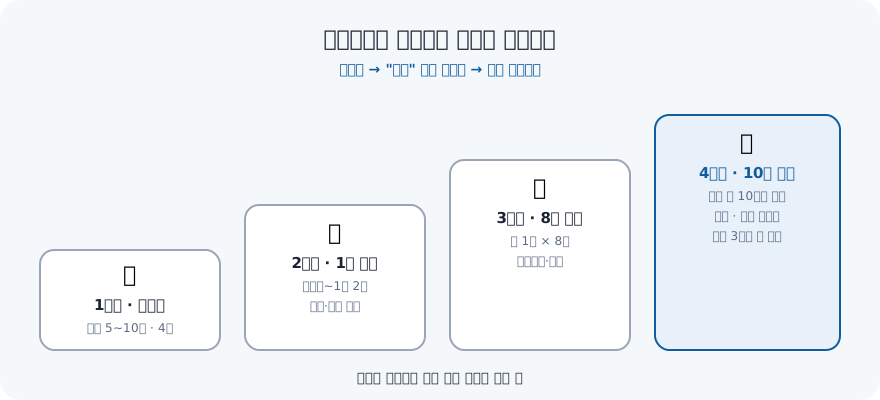
Vipassana Meditation for Beginners — From a 10-Minute Noting Practice to a 10-Day Retreat, the 4-Step Ladder
Tried vipassana meditation, lasted three days, and stopped again? Drifting off, noticing, and coming back to the breath IS vipassana. Here's a comparison with samatha, mindfulness and MBSR, the exact order for breath, body-scan and walking practice, a noting word list, a 4-week 10-minute routine, and how to choose between apps, day retreats, 8-week courses and a 10-day retreat.
Read →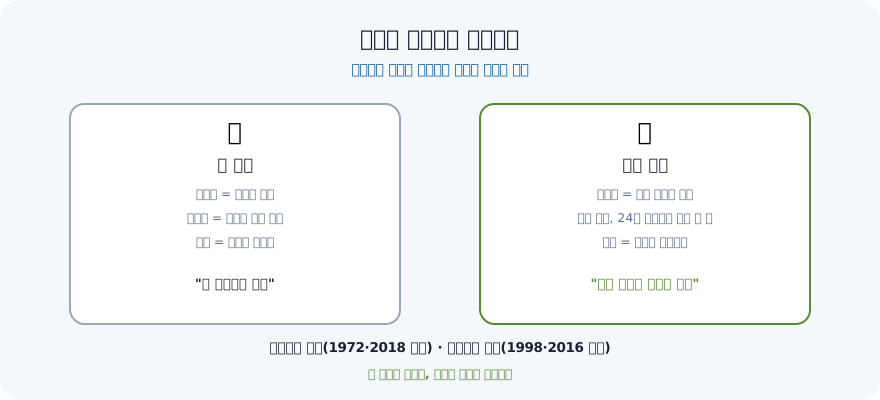
The Science of Self-Control — It's Not Willpower, It's What the Marshmallow Test Actually Found
The marshmallow test that supposedly predicted success, and the ego-depletion theory that treated willpower like a muscle — both got very different results when large-scale replications ran in the last decade. Here's what the 2018 replication actually found, what 24 labs confirmed in 2016, and a 4-step way to practice self-control through design instead of grit.
Read →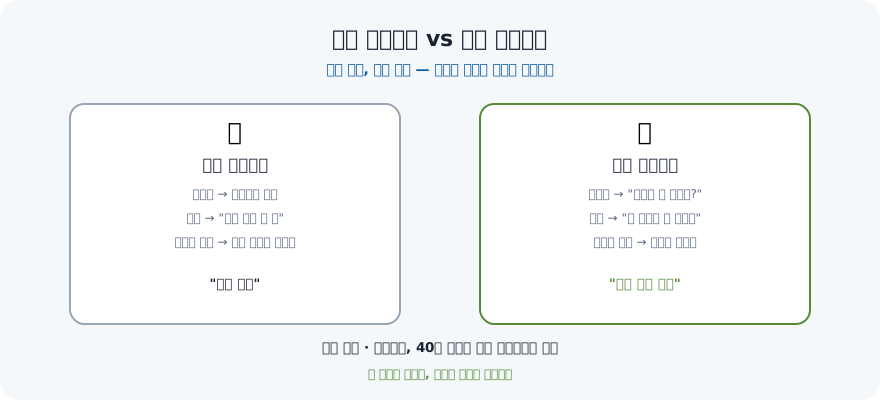
Growth Mindset vs Fixed Mindset — The 3 Reactions That Reveal Which One You Have
Two people face the same failure. One collapses, the other gets back up — and the difference isn't talent, it's mindset. Stanford psychologist Carol Dweck spent 40 years mapping fixed vs growth mindset. Here's the comparison table, the 3 moments where the two diverge, and the 5-step path to shifting yours.
Read →
How to Do a 5-Minute Daily Review — Stop Grading 'What You Didn't Do' (3-Line Format + Timebox)
A review method for people who drop everything after missing a single day. The point of a 5-minute review isn't reflection — it's closing the day. A three-line format (one thing that went well, one that didn't, one for tomorrow), a 0–5 minute timebox, a diagnostic table for the 4 ways a review dies, the difference between daily, weekly and monthly reviews, a recovery rule that only blocks two misses in a row, and a comparison of paper, notes apps and dedicated apps.
Read →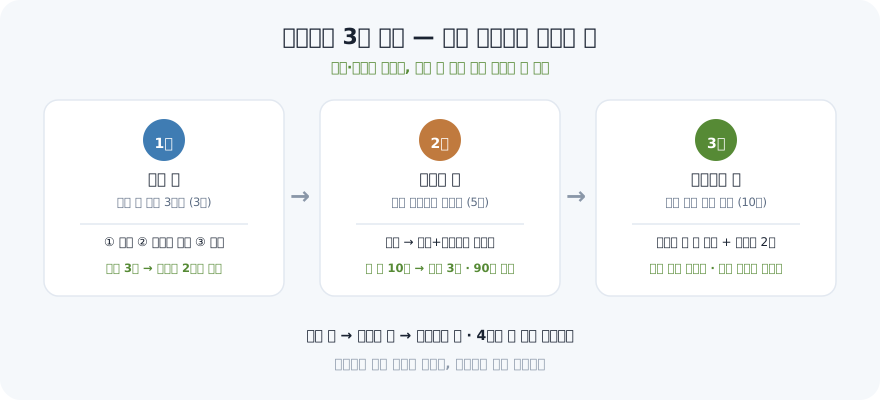
A Top Performer Isn't the Fastest Worker — It's the Most Predictable One
If you work the longest hours but always land in the middle of the review curve, the problem isn't your skill — it's how you take work in and how you show progress. Here's the real definition of a top performer (predictability, not throughput), the 5 forks that separate them from people who simply do a lot, a 3-sentence intake script with the 3-minutes-vs-2-hours math, a next-physical-action conversion table, the 50% draft rule and three deadline-renegotiation scripts, plus a 5-question self-check and a 4-week switch plan.
Read →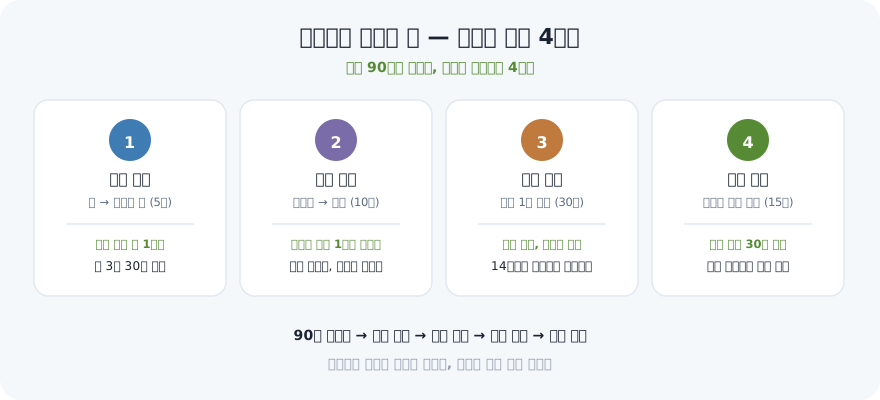
The 90-Second Rule for Envy: 4 Steps to Stop Comparing Yourself to Everyone Else
One promotion post in a group chat can take down an entire evening. Inferiority isn't a defect to delete — it's fuel pointing in the wrong direction. Here's Adler's distinction between an inferiority feeling and an inferiority complex, the one condition that makes upward comparison useful instead of corrosive, a three-type self-diagnosis (Ability / Pace / Identity), the 90-second protocol that gets you through the surge without doing damage, and the four steps after it — reframe the baseline, translate the envy, collect evidence, design your exposure — plus a four-week run sheet.
Read →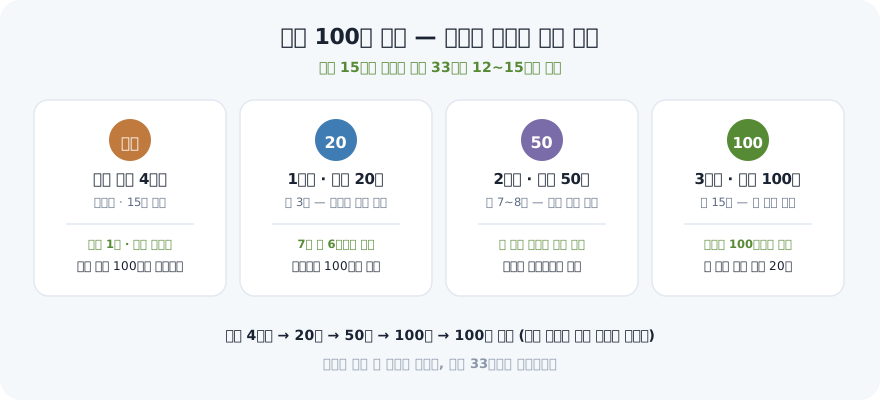
Writing Your Goal 100 Times a Day: Why It Dies on Day Three — And the 21-Day Ramp That Fixes It
Writing one goal by hand 100 times a day for 100 days is a discipline made famous by Korean entrepreneur Kim Seung-ho. Most people quit on day three, and it isn't willpower. Here's the arithmetic nobody runs first (word count decides whether this costs 20 minutes or 47), the four places it breaks, four rules for a sentence worth repeating, a 21-day ramp from 20 reps to 100, how it compares to the 55x5 method and affirmations, and what to do on the day you miss.
Read →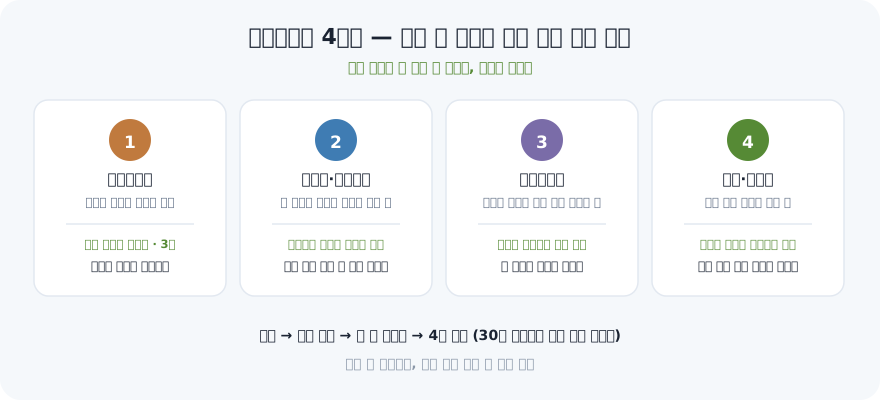
Self-Help Book Recommendations: The Order Matters More Than the List — A Two-Line Quadrant for Picking the Right One Now
There is no shortage of best self-help books lists, and yet most of us finish none of them. The problem isn't the list, it's the order. Here are the four types of self-help book, a two-line quadrant that tells you which type you need right now, a staged reading order, a 30-minute test-read filter that kills half your shortlist before you buy, and a four-week plan for actually finishing one.
Read →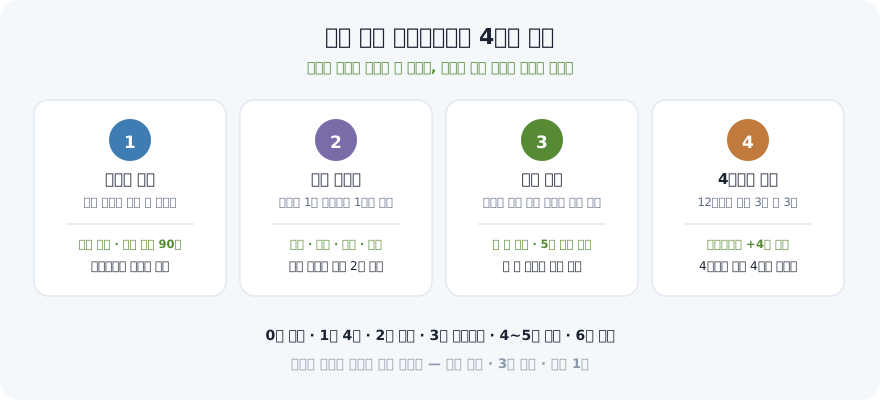
Why Book Clubs Quietly Die in 3 Months — And the 6-Week Blueprint for One That Lasts
Ten pages at home is a struggle, but the night before book club you read eighty. That's not willpower — it's a seat that's waiting for you. Here are the 5 patterns that quietly kill a club, a comparison of workplace, library, online, and paid clubs, a 30-minute prep routine for hosting a discussion, a 6-week blueprint for starting your own, and 4 ways to rebuild the same structure alone.
Read →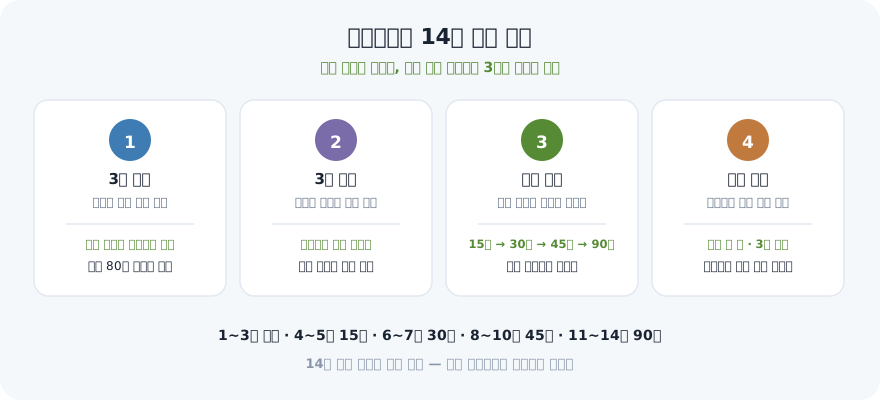
How to Break Phone Addiction — A 14-Day Structure Plan for People Who've Quit Screen Time Three Times
You install a blocker, you tap 'Ignore Limit', and three days later you're back where you started. The problem isn't willpower — it's that nothing puts three seconds between your hand and your phone. Here's the 3-day log that finds your two weak hours, a friction table ranked by how easily each device breaks, and a 14-day plan that adds 15 minutes at a time.
Read →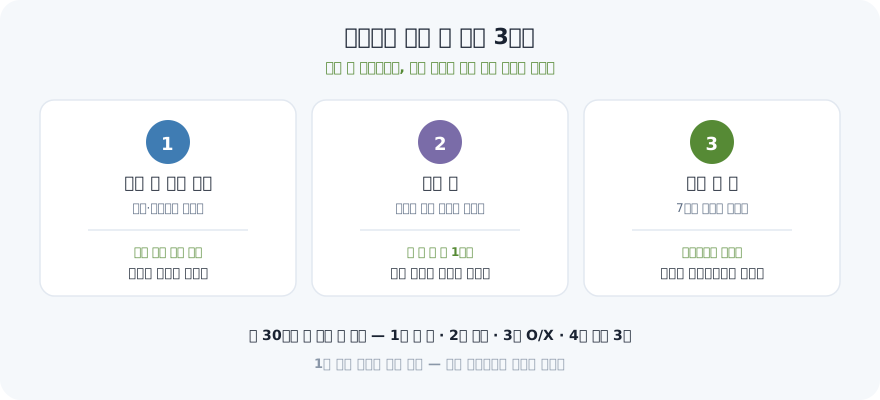
Before You Buy a Planner — 3 Checks That Decide Whether You Finish the Year
Most planners die in the first week of January, and buying a nicer one doesn't fix it. Three checks to run before you pay (a place for the missed-day rule, a carry-over slot, and a weekly view), where each planner format actually breaks, and a 4-week starter plan for your first 30 days.
Read →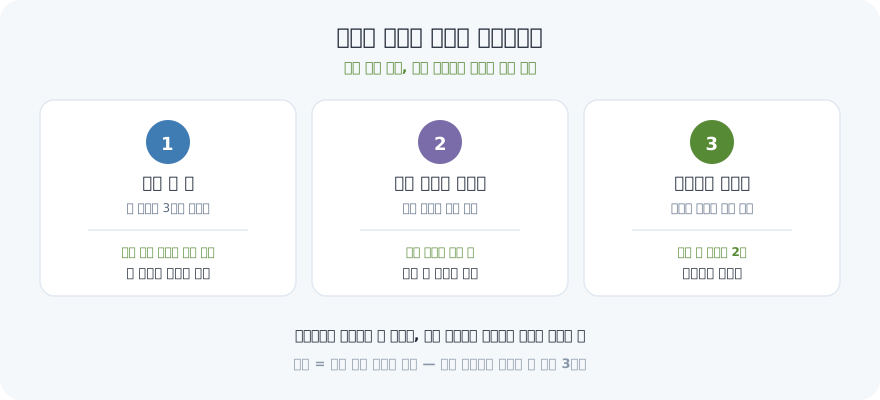
How to Build a Reading Habit — No Finish-the-Book Guilt, a 3-Step System That Survives a Missed Day
If every book you buy gets shelved within three days, the problem isn't willpower — it's finish-the-book guilt. Aim for 'one page today,' not 'one chapter a day.' A reset rule that only avoids two misses in a row, plus a perfectionism safety net. A 3-step reading system that keeps you from closing the book for good.
Read →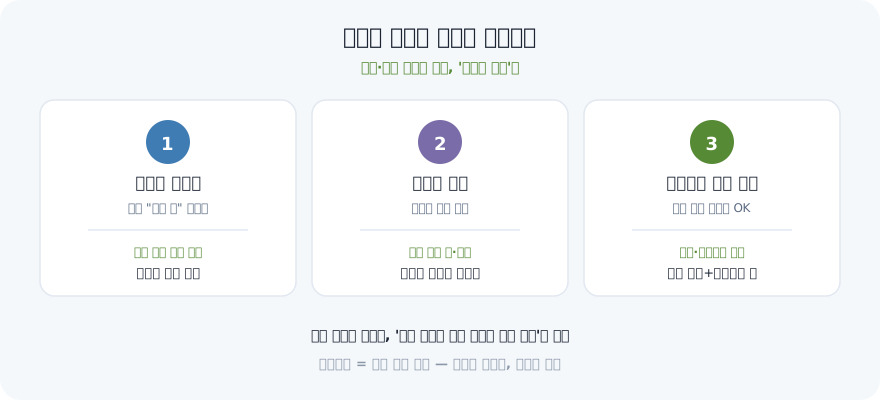
Why You Finish Books at a Reading Cafe but Never at Home — It's Environment, Not Willpower
You can't get through three pages at home, yet an hour flies by the moment you sit down at a cafe or library. The problem isn't willpower — it's trying to read 'alone, anywhere, anytime.' Turn space into a switch and company into a deadline with this 3-step reading-cafe method, plus how to recreate it online when you can't go in person.
Read →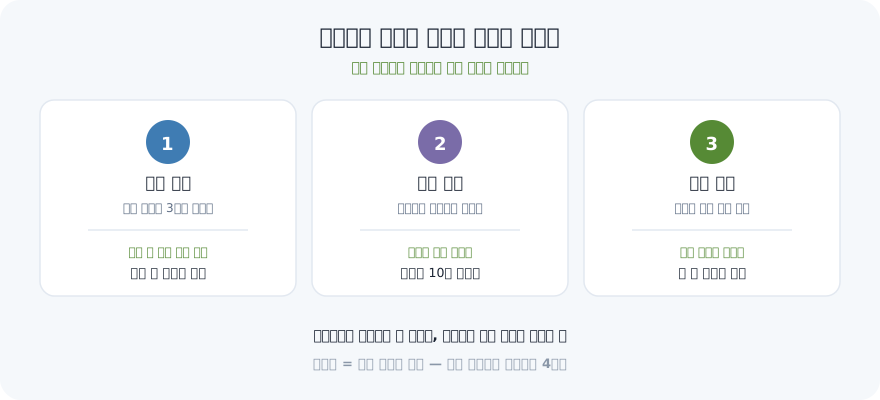
How to Be More Productive — Not Willpower, But a 4-Step Structure That Survives a Missed Day
Productivity isn't a willpower problem; it's a design problem. Stop trying to beat three-day quitting. Build a structure that doesn't collapse the moment you slip once. Shrink the goal, design the environment, set a reset rule, add a safety net — a 4-step productivity system you can set up in 30 minutes today.
Read →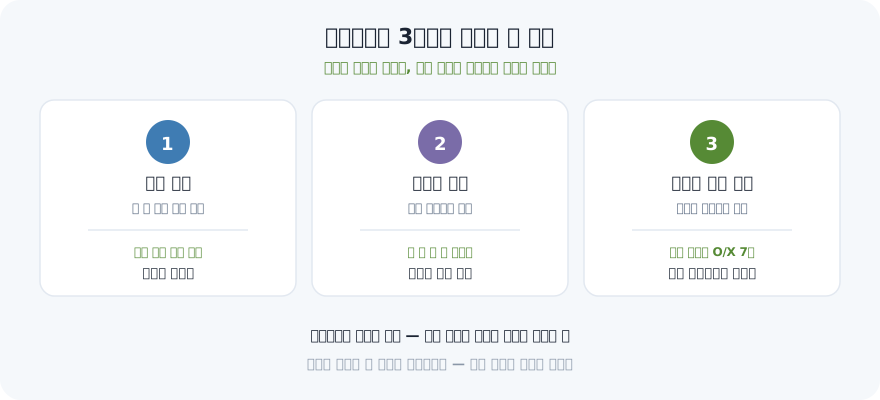
You Closed the Planner on Day 3 — The Planner Isn't the Problem
You filled in the first few pages and put it in a drawer. What broke on day three wasn't your willpower — it was the fact that nothing in that planner catches you when you miss a day. The three exact points where planners die, and the 4 steps to reopen the one you already own.
Read →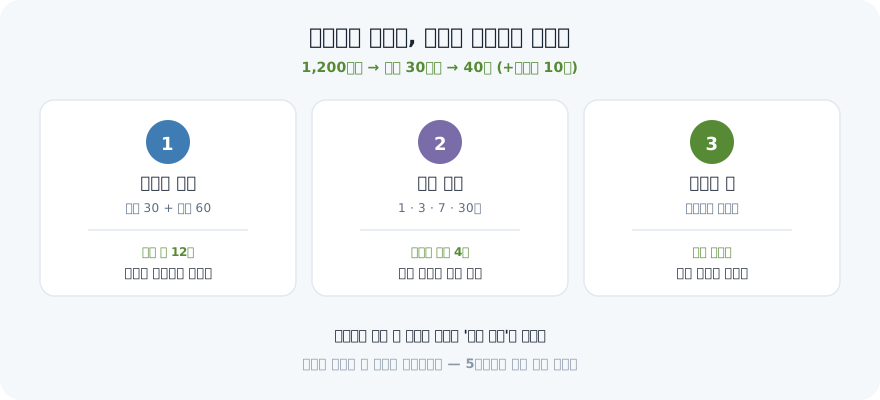
Why Your Vocabulary Workbook Always Dies at Page 30 — A 40-Day Plan to Actually Finish One
You don't abandon vocabulary workbooks because you lack willpower. You abandon them because the book never tells you what to do today. Here are answers to the five questions people actually ask: what order, how many words a day, how many days per book, when to review, and what to do when you fall behind.
Read →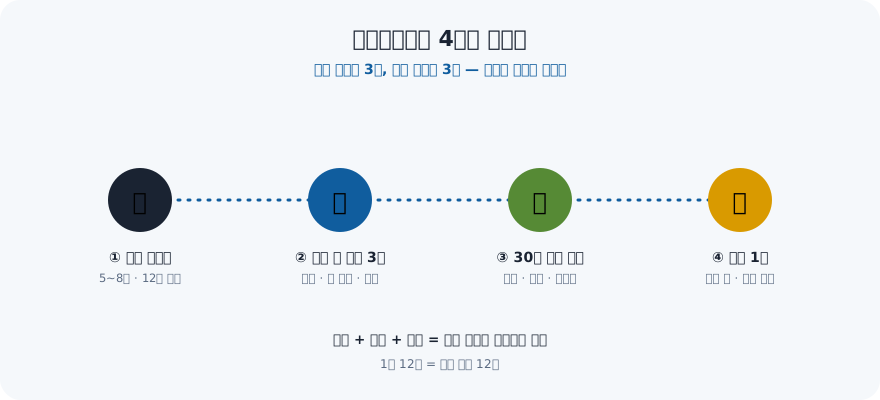
Adult Book Discussion Groups: Read Alone and You Last 3 Days — Read Together and You Last 3 Years
You're not failing to read because you lack willpower. You lack a system. A book discussion group supplies the deadline, the audience, and the output that reading alone never gives you. Here's the 4-step system: pick the group, prep 3 questions, speak in a 30-second structure, and land it on one action.
Read →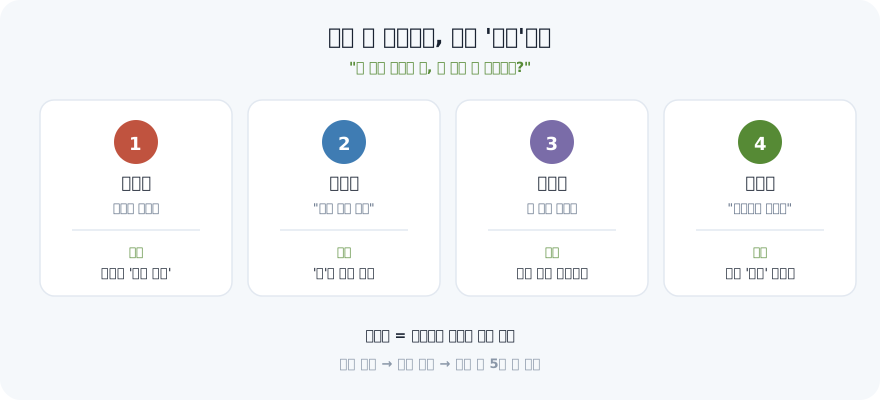
I Put It Off Again Today — Diagnose Why You Procrastinate, Then Fix That
Procrastination isn't one problem, so one fix never works. It's four: anxiety, boredom, burnout, and overwhelm. Diagnose which type you are with one honest question, then apply the matching prescription — and a 5-minute routine that gets you moving tonight.
Read →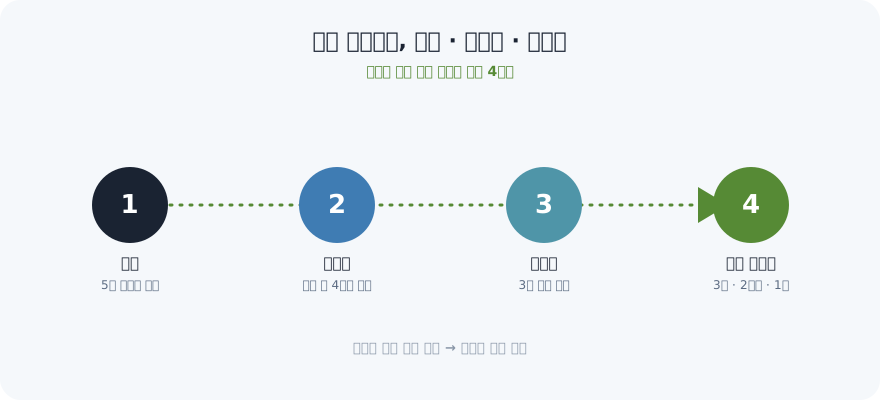
How to Find a Book Club in Your Neighborhood — And Start One If There Isn't
You searched for a local book club, found nothing that fit, went once and quietly never went back. The problem isn't that clubs don't exist — it's that you have no way to find them and no filter to judge them. Here are the 5 channels to search, the 6 criteria to screen a club, and the 4 steps to start your own.
Read →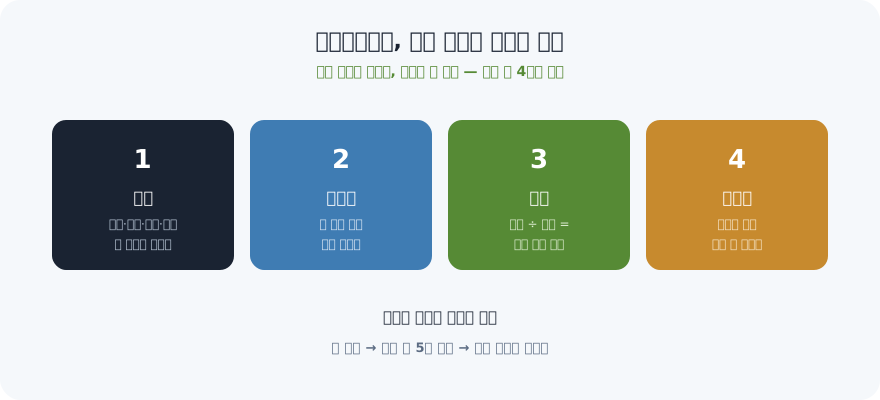
How to Choose a Paid Book Club — 7 Checks Before You Pay
You paid, so surely you'd read this time — and three weeks later the bookmark hasn't moved. Money buys motivation, not habit. Here's what actually makes a paid book club work: the 4 criteria for picking the right one, a 7-point checklist before you pay, and the 3 steps that turn finishing a book into a changed life.
Read →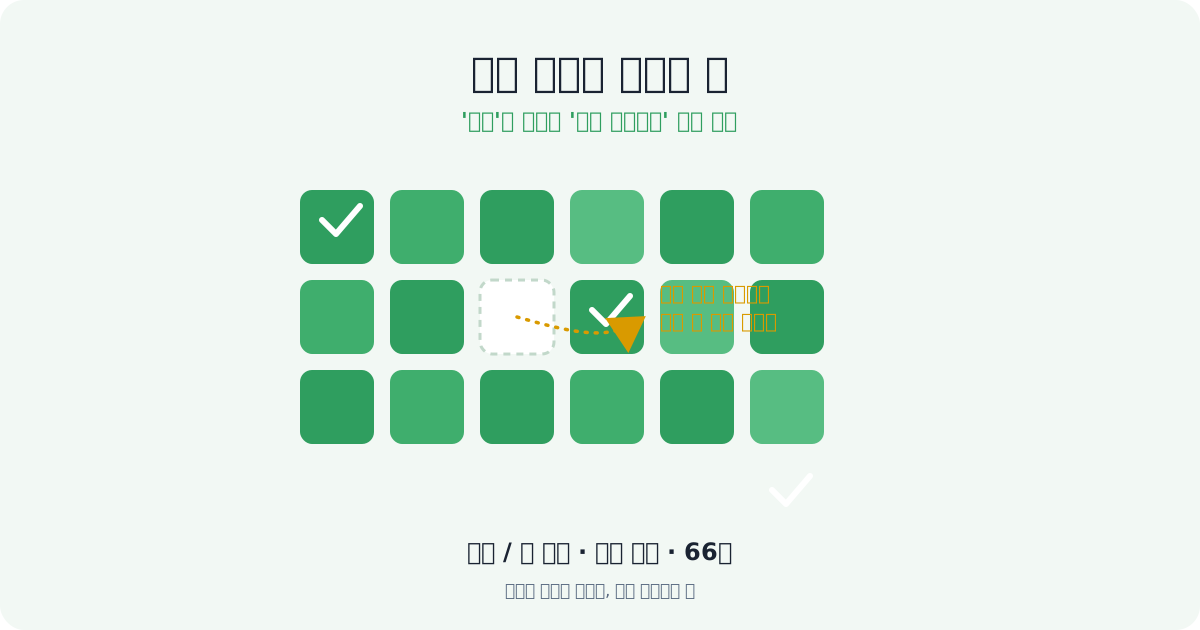
How to Build a Habit Tracker — A Tool That Brings You Back, Not One That Demands Perfection
After three weeks with a habit tracker, I learned one thing: its real power isn't keeping a perfect streak — it's getting you to come back the day after you miss. Here's how to build a tracker that survives a missed day, with a simple recovery rule and the 66-day view.
Read →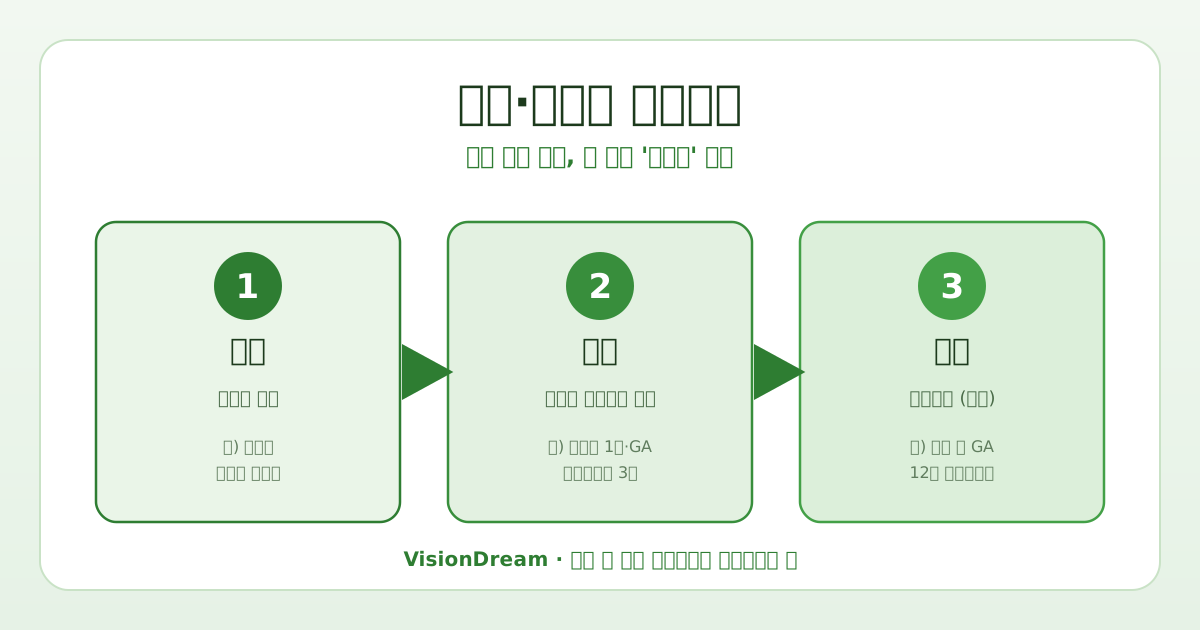
How to Make a Career Vision Board — Skip the Pretty Photos, Fill In the Boxes (for Students & Job Seekers)
"I pinned a bunch of pretty pictures and it fizzled out." A career vision board isn't a mood collage — it's a template with boxes for job, skills, and timeline. Here's exactly what to write in each box, with real examples, so your board turns into a plan you actually act on.
Read →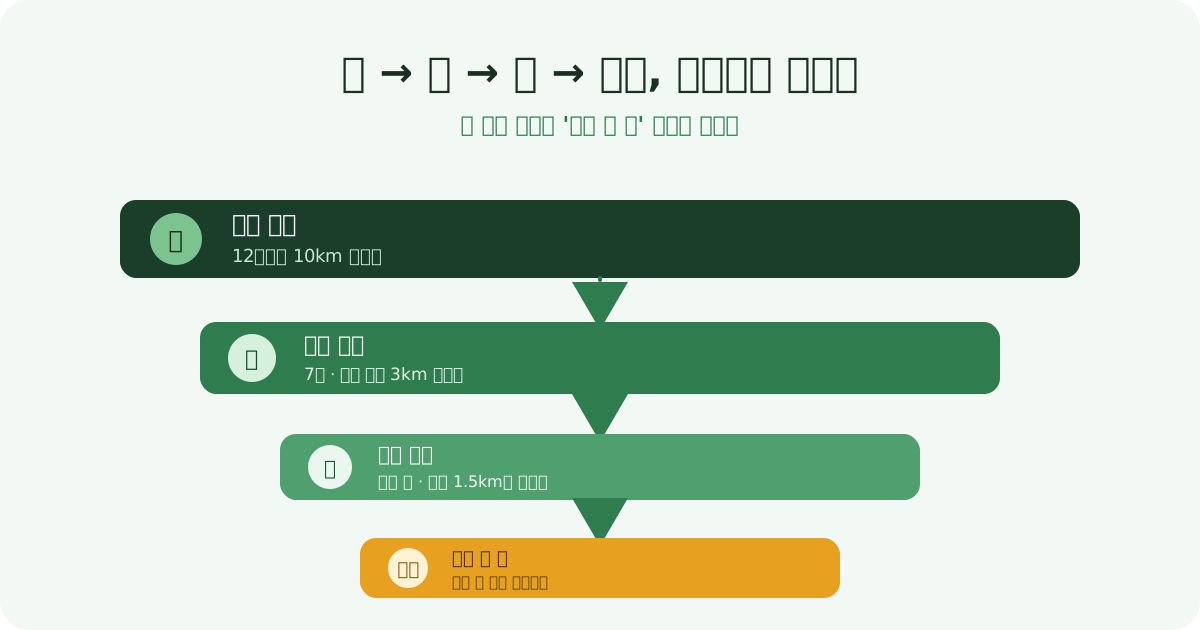
Build a Goal Planner in Notion (Year → Month → Week, Actually Connected)
You made a beautiful planner and stopped opening it after three days. The problem usually isn't the template — it's that your yearly, monthly, and weekly plans aren't linked. Here's how to build a connected goal planner in Notion, step by step, so a big goal turns into today's task.
Read →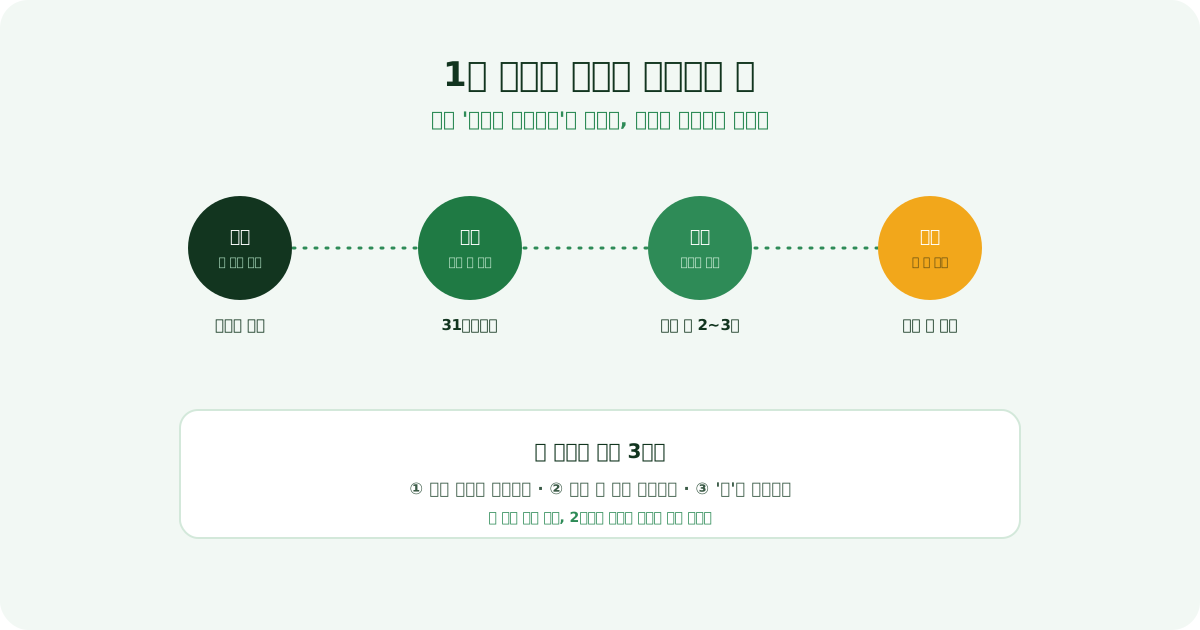
Goal-Tracking Apps — How to Pick One and Actually Finish Your Yearly Goals
You've installed goal apps before and abandoned them by February. The problem usually isn't discipline — it's that the app never connected 'this year' to 'today.' Here's how to choose a goal-tracking app by the way it tracks, and how to ladder a yearly goal down to today's task.
Read →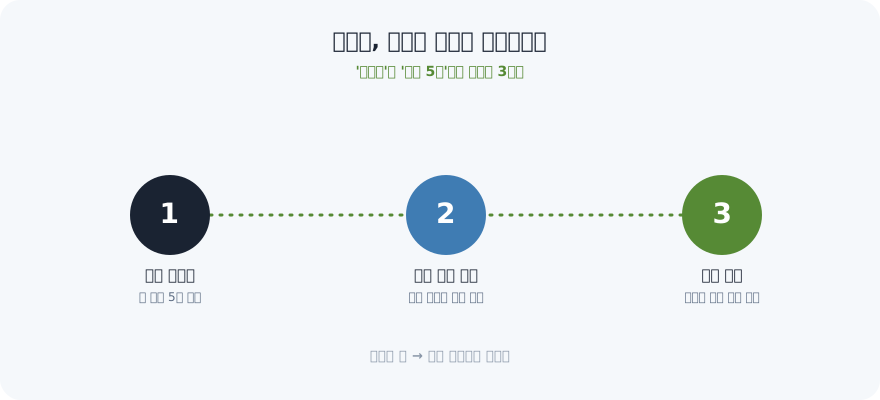
How to Stop Procrastinating — Break the Habit With Systems, Not Willpower
You don't procrastinate because you're lazy — your brain is avoiding discomfort. That's why 'try harder' never works. Here's how to break the habit with a system instead of willpower: shrink the task, plan the recovery, and design the environment so starting is the easy choice.
Read →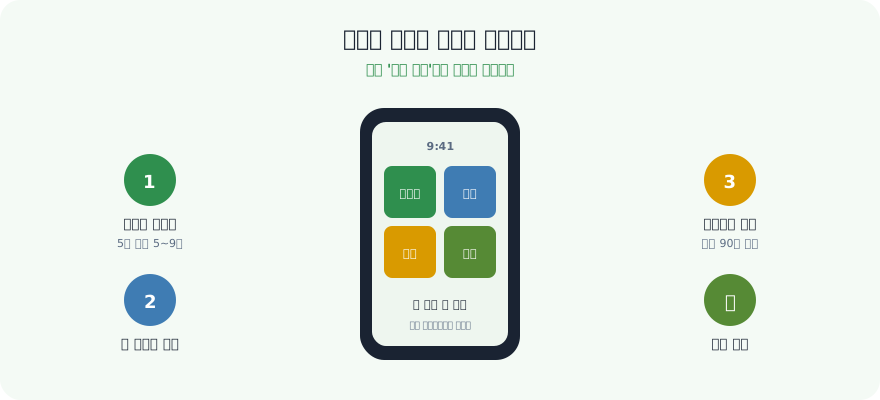
How to Make a Digital Vision Board on Your Phone (So You Actually See It Daily)
Made a vision board and never looked at it again? The problem isn't the board — it's that nothing connects the pictures to action. Build a digital vision board on your phone in 3 steps (exact size, lock-screen setup), pair every image with an if-then action, and keep it alive with a 4-week routine and a 5-minute weekly check.
Read →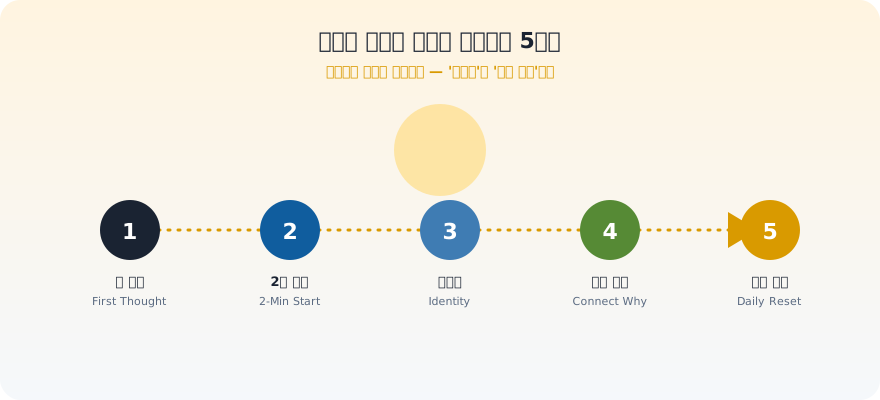
5 Miracle Mindsets That Change Your Morning — Why Willpower Fails and What Works Instead
The Miracle Morning dies in three days because you're fighting your own brain at 6 a.m. The fix isn't more willpower — it's five simple mindset shifts. Here are the 5 miracle mindsets that make mornings stick, with examples and how to run them every day with VisionDream.
Read →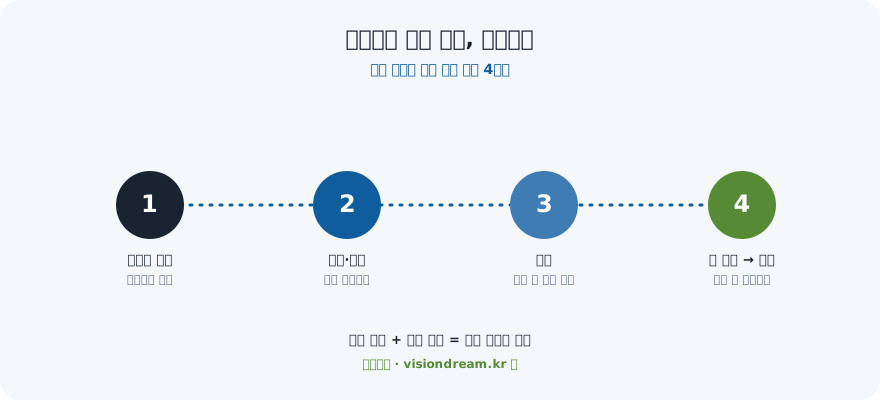
Lee Dong-jin's Reading Method — He Doesn't Read to 'Get Things Done,' So Why Does It Still Change His Life? (4 Steps to Copy It)
Lee Dong-jin, the Korean film critic famous for his enormous personal library, doesn't read for productivity — he reads slowly, deeply, and re-reads. Yet his reading clearly shapes his life. Here's what deep reading actually looks like, why 'reading more' isn't the answer, and the one move that turns a slow, savored book into real action.
Read →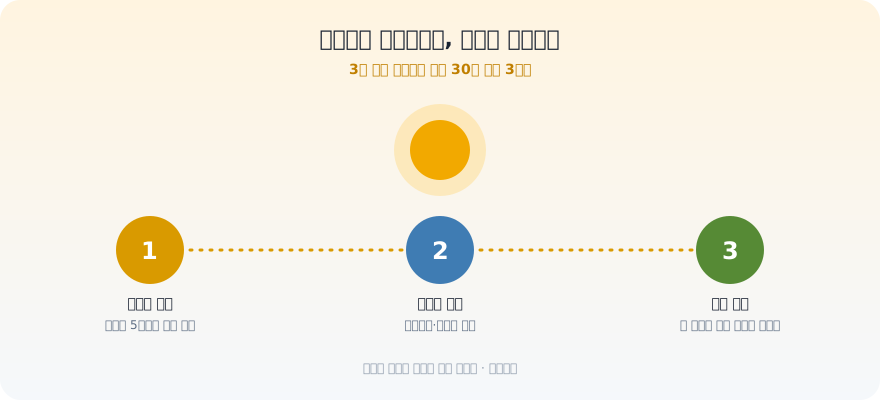
The Kim Mikyung Miracle Morning, Made Your Own — The Sleep Math Behind 5 A.M. and a 3-Week, 30-Minute Ramp
In Korea, mentor and author Kim Mikyung turned the Miracle Morning into a movement. Most people still quit on day three — and it's arithmetic, not character: sleeping at midnight and rising at 5 leaves you about 6 hours of sleep debt by the third morning. Here's the back-calculation table that tells you what time you must be asleep, a 3-week ramp from 30 to 60 minutes earlier, a 30-minute block plan for what to actually do, the four places it breaks, the rule for the morning you miss, and an honest comparison with optimizing your evening instead.
Read →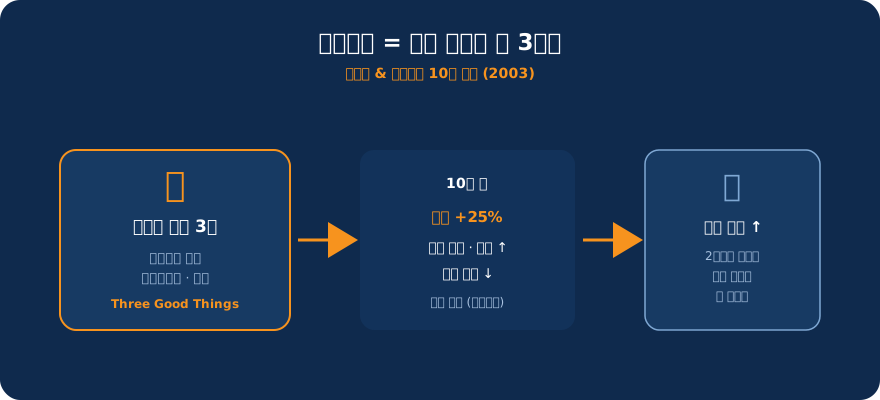
Gratitude Journal — Three Lines a Day, 25% Happier in Studies. So Why Does Everyone Quit by Day Three?
A gratitude journal is just writing down what you're thankful for — and in Emmons and McCullough's landmark study, people who did it weekly were 25% happier after ten weeks, slept better, and made more progress on their goals. Here's how to actually keep one, why most people quit in three days, and how to make it stick.
Read →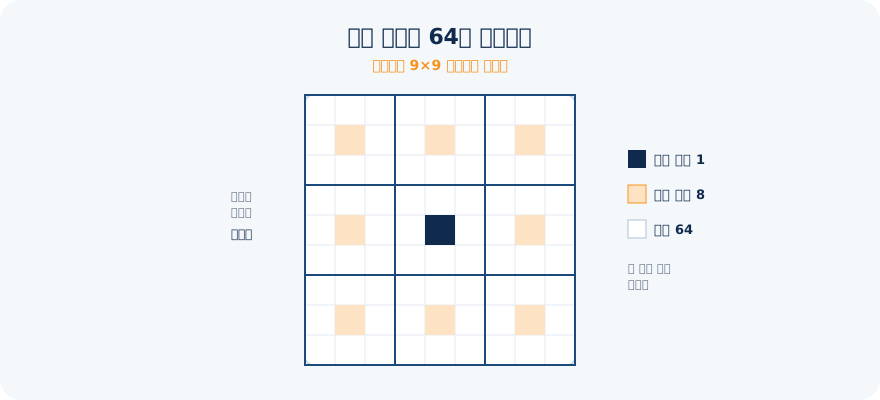
The Mandal-Art Chart — Ohtani's 9×9 Goal Grid and How to Fill Every Box (Template + 5 Steps)
The Mandal-Art chart is the 9×9 grid Shohei Ohtani used in high school: one real goal in the center, eight sub-goals around it, and eight concrete actions under each. It works because it breaks one huge goal into 64 doable actions. Here's how to fill every box — and how to keep the finished chart from dying in a drawer.
Read →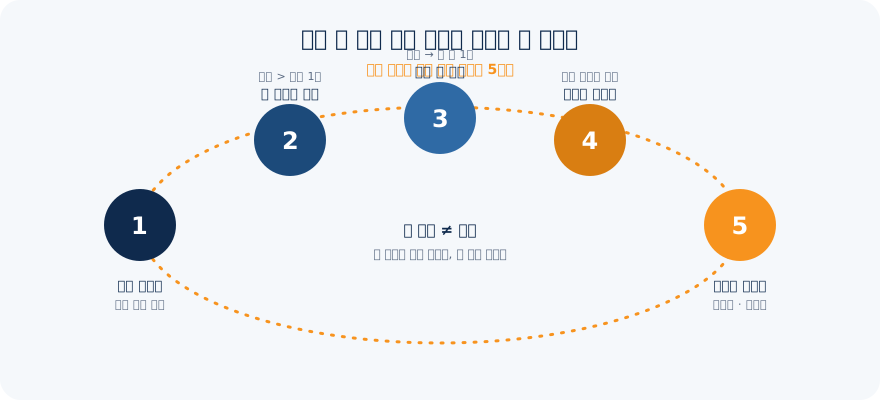
Reading for Action — Why Nothing Changes After You Finish the Book (5 Steps to Make It Stick)
You can read twenty self-help books and stay exactly the same — because you mistook finishing for doing. A book sticks not when you turn the last page, but when you turn one idea into action. Here's the reading-for-action loop: set a question, pull one thing, translate it into a this-week action, attach it to a habit, and log it in review.
Read →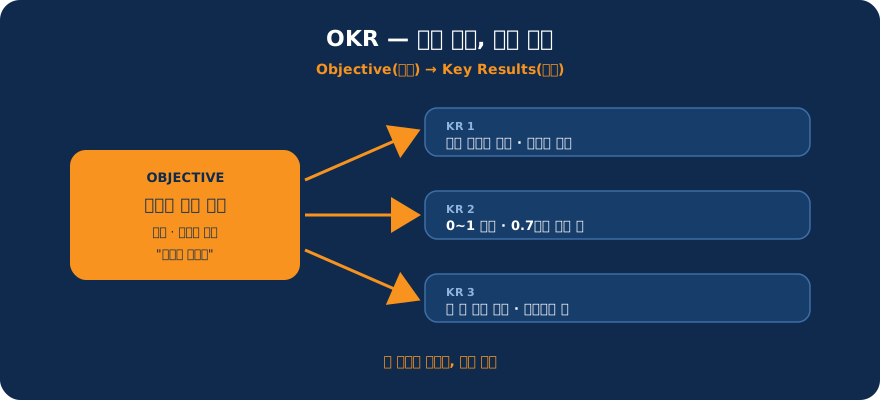
OKR Goal Management — Made Simple for One Person
OKRs aren't just for companies. An Objective is one inspiring direction; Key Results are 2–3 measurable outcomes that prove you got there — not a to-do list. Here's how to run OKRs for yourself, quarter by quarter, and the three mistakes that quietly ruin them.
Read →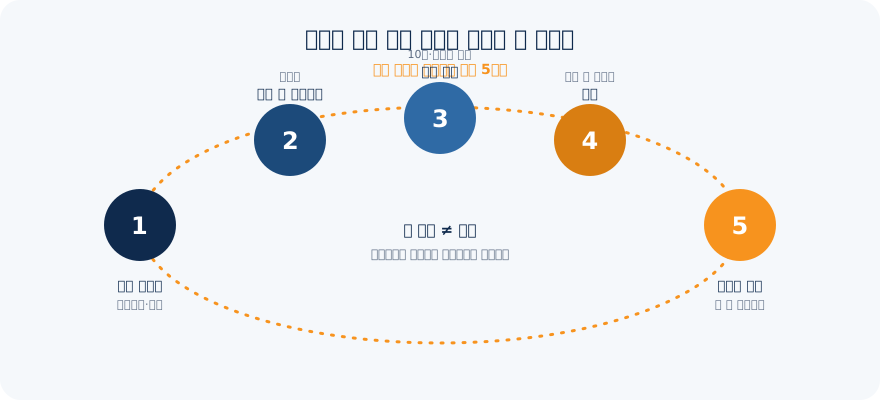
Goal Management — Why Goals Die After You Set Them (and How to Keep Them Alive)
Setting a goal is the easy part. Goals don't die on the day you write them — they die in the weeks nobody manages them. Here's the goal management loop: make it visible, break it into this week's actions, review weekly, adjust, and connect it to your vision.
Read →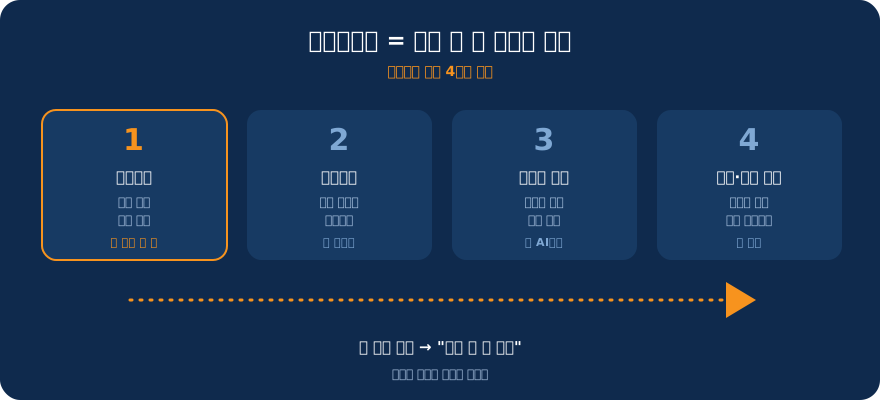
Self-Efficacy — How to Build the Belief That You Can Do It
Self-efficacy is the belief 'I can do this' — and it isn't a personality trait you're born with. It's built from evidence. Here's how Bandura's four sources turn 'I'm just not capable' into quiet, earned confidence — starting with the smallest possible win.
Read →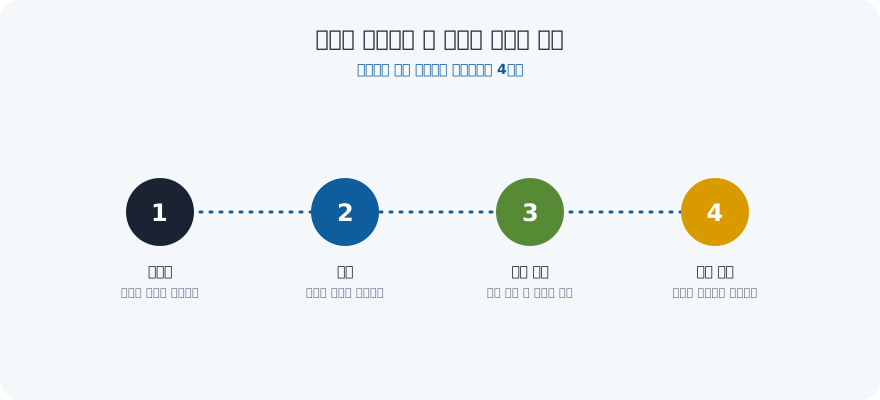
How to Build Mental Strength — The 4-Week Drill That Starts With Timing Your Recovery
Mental strength isn't a personality you're born with — it's a muscle. And the muscle isn't 'never getting shaken'; it's how fast you come back. Here's a 4-line log that turns recovery into a number, the 90-second rule for the wave that actually passes, a prescription table for the four types of being shaken, an 8-row feeling-vs-fact conversion table, a 5-question self-check and a 4-week drill — plus the line where this stops being training and becomes a reason to see a professional.
Read →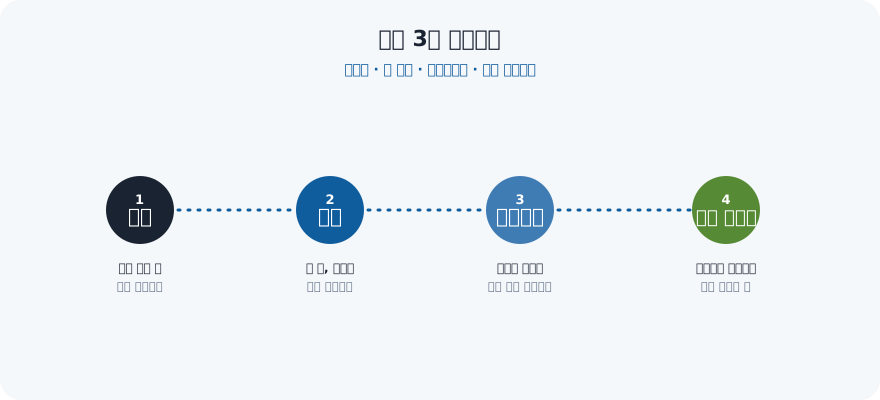
Mindfulness for Beginners — Three Minutes to Steady Your Mind and Return to Your Vision
Mindfulness isn't some mystical, hour-long meditation. It's simply staying with the present moment. Here's a plain, three-minute practice — pause, breathe, notice — that calms a scattered mind so you can get back to what matters: your goals and your vision.
Read →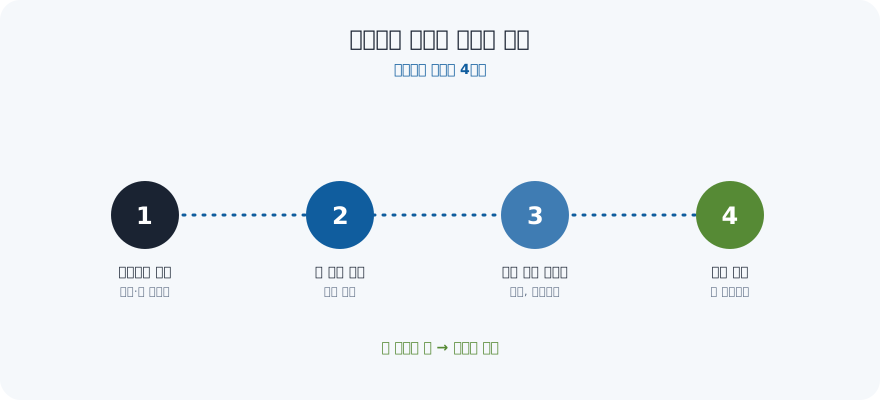
How to Improve Focus — Diagnose 3 Root Causes, Then Train for 4 Weeks
If you're at your desk and can't concentrate — and you don't even know why — start by splitting the cause. A 30-second self-check for the three types (environment, energy, meaning), a 6-minute three-layer distraction sweep, a 4-week training table from 10 to 50 minutes, and five fixes for when it falls apart.
Read →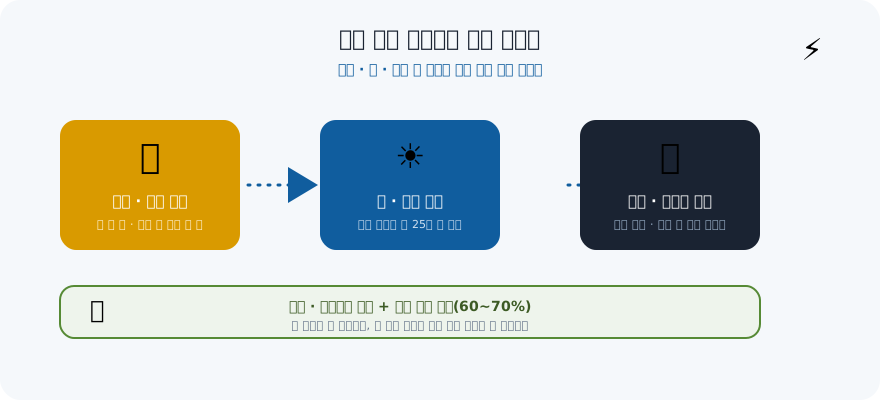
Designing a Sustainable Daily Routine — A Day System That Doesn't Burn You Out
The 'godsaeng' (productive-life) trend makes people pile on habits until they crash. The fix isn't a harder morning or a stricter night — it's designing the whole day as a system you can actually keep. Small anchor habits, three time-blocks, gentle intensity, and a link to your vision.
Read →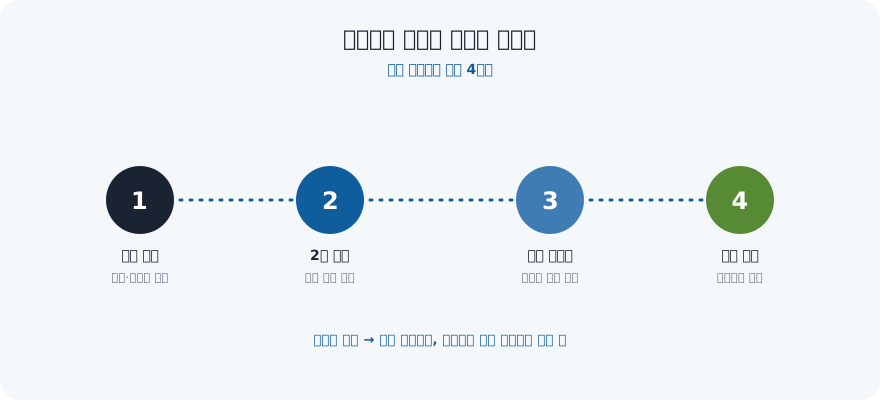
How to Overcome Laziness — It's Not a Character Flaw, It's a Signal
Laziness isn't who you are. Most of the time it's a signal — low energy, low motivation, or a task that feels too big. A 60-second self-check for the five signal types, a 2-minute conversion table, a way to count friction in steps, and a 7-day plan to get moving again.
Read →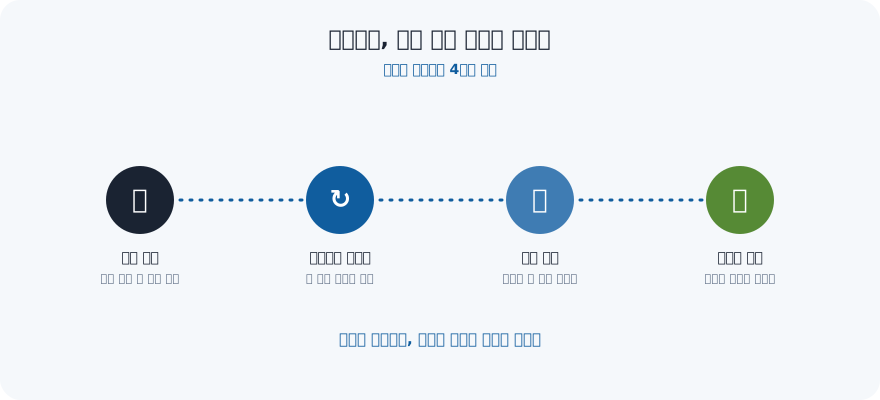
Grit and Consistency — Why the Person Who Lasts Beats the Talented One
Talent gets the applause, but consistency gets the results. The compounding math of 1% a day, the 66-day average before a habit feels automatic, a minimum-version table for bad days, a 48-hour recovery procedure for a broken chain, and 30/60/90-day checkpoints — how to last on structure instead of willpower. Plus a frequency comparison (daily vs. 5 or 3 days a week: 365 reps a year against 156), four streak-protecting devices side by side, three 12-week logs showing where each chain broke and what restarted it, a three-layer goal table, a four-question quit-or-hold verdict and a six-question self-check for where your grit leaks.
Read →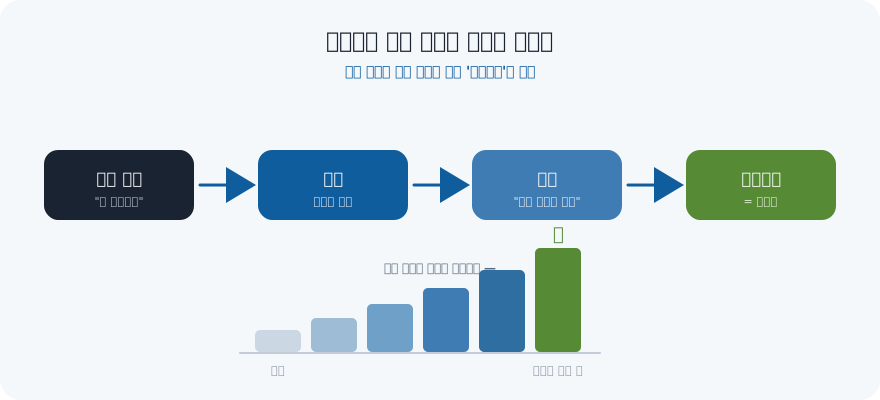
How to Build Self-Esteem — Stack Evidence, Not Affirmations
Self-esteem isn't a mood you can talk yourself into. It's self-trust — and trust is built by keeping small promises to yourself until the evidence is undeniable. Here's the behavior-based way to raise your self-esteem, and why repeating affirmations alone rarely sticks.
Read →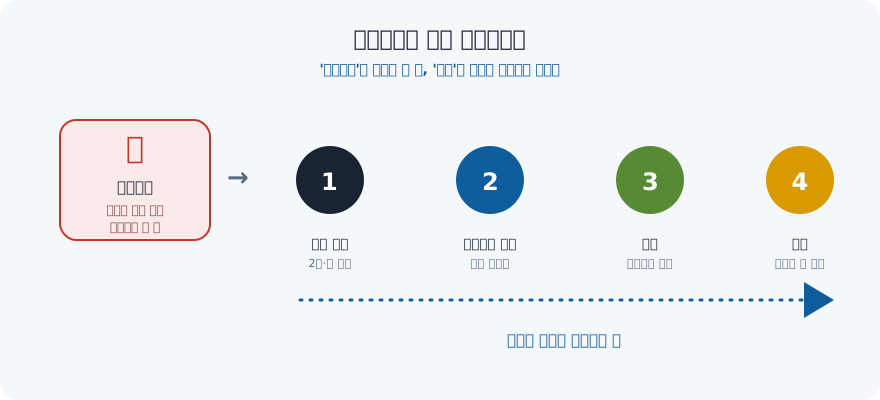
Overcoming Perfectionism — When 'Perfect' Blocks 'Start'
Perfectionism doesn't make your work better — it keeps you from starting it. When the bar is set impossibly high, the first move feels dangerous, so you wait. Here's how 'done beats perfect' quietly frees you to act today.
Read →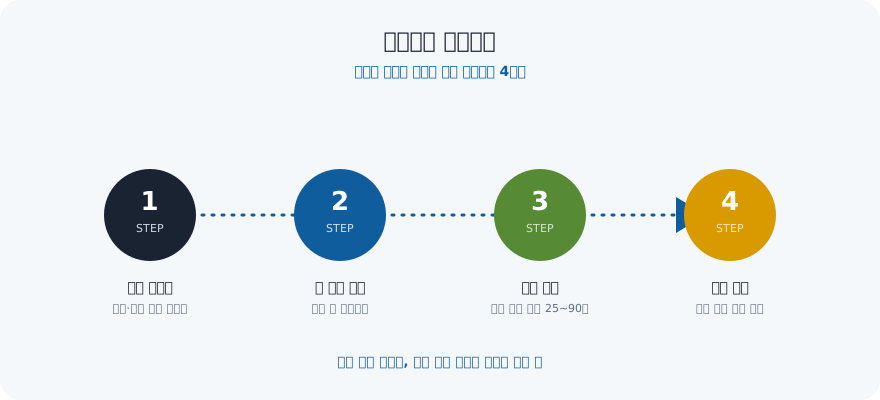
Deep Work — How to Focus Deeply in a Distracted Age
Focus isn't a personality trait — it's a setup. The 20+ minutes you lose to one notification, a minute-by-minute 90-minute block blueprint, a distraction-by-distraction blocking table, a 3-week focus-training plan, and 15/50/90-minute versions for days you don't have an hour.
Read →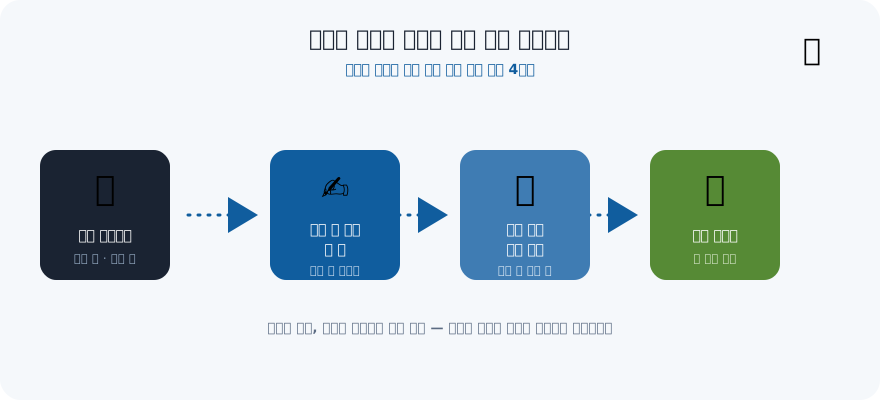
The Evening Routine — Ten Minutes Tonight Decides Tomorrow Morning (4-Step, 10-Minute Checklist)
A great morning isn't willed into being at dawn — it's built in ten minutes the night before. Tomorrow's first action in 3 minutes, screens off in 4, closing today in 2, vision in 10 seconds — plus a bedtime-anchored placement table, 30/15/5-minute versions, four collapse types with prescriptions, a 14-night scoreboard, return rules for weekends, travel and sick days, and versions for late shifts, parents and night owls.
Read →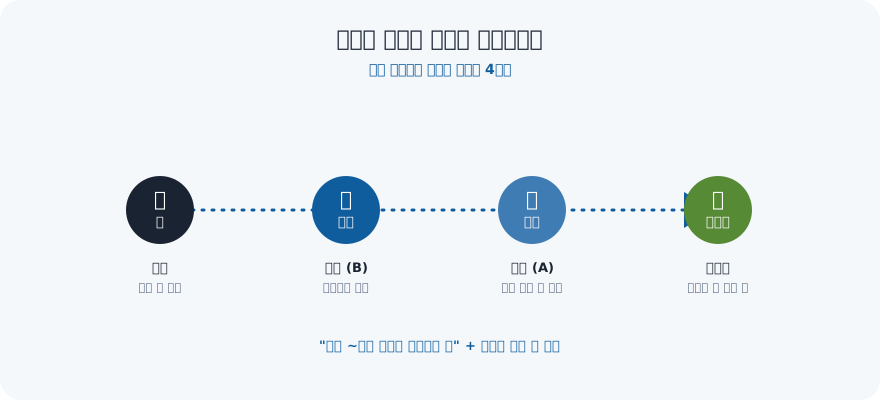
How to Use Affirmations That Actually Work — The Truth About 'Manifesting'
Repeating 'I am wealthy' in the mirror won't deposit money in your account. But affirmations aren't useless — they're a tool to reshape identity and behavior, not magic. Here's how to write affirmations that actually change something, and what the law of attraction gets wrong.
Read →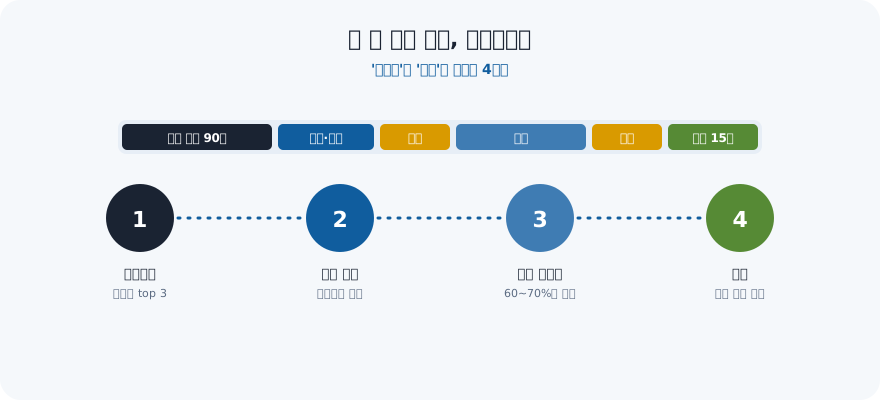
Time Blocking — Why Your To-Do List Keeps Failing You (The 60/40 Rule and a 5-Step Day)
A to-do list tells you what to do, but never when — so the urgent always eats the important. A 3-day energy log to find your sharpest hours, three block sizes (25/50/90 min), the 60/40 rule and buffer math by meeting load, the 1.5x estimation rule, block names with finish lines, a real 9-to-6 example schedule, the four ways week one breaks, a 15-minute rebuild for a collapsed day, a two-week block audit with adherence benchmarks, office vs. remote designs, day theming, and five systems compared.
Read →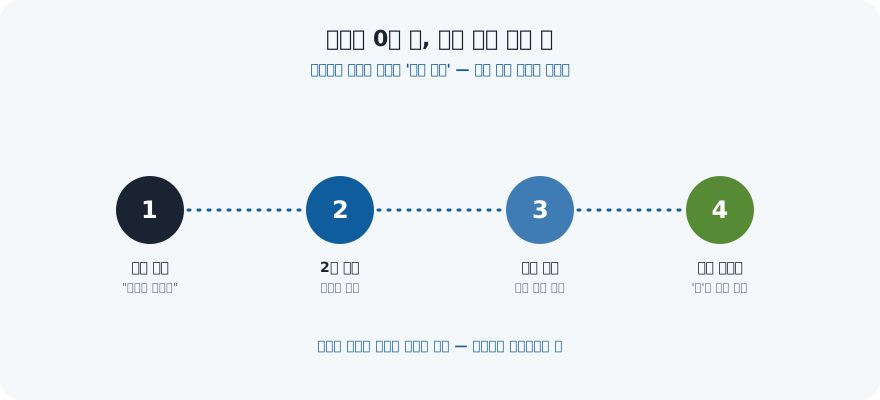
How to Beat a Slump — Jump-Starting When Your Motivation Is at Zero
When you feel nothing — no drive, no spark, just heavy — willpower won't fix it. A slump isn't laziness; it's a stalled engine. Here's how to jump-start it with a 2-minute action, a changed environment, and a reconnection to why you started.
Read →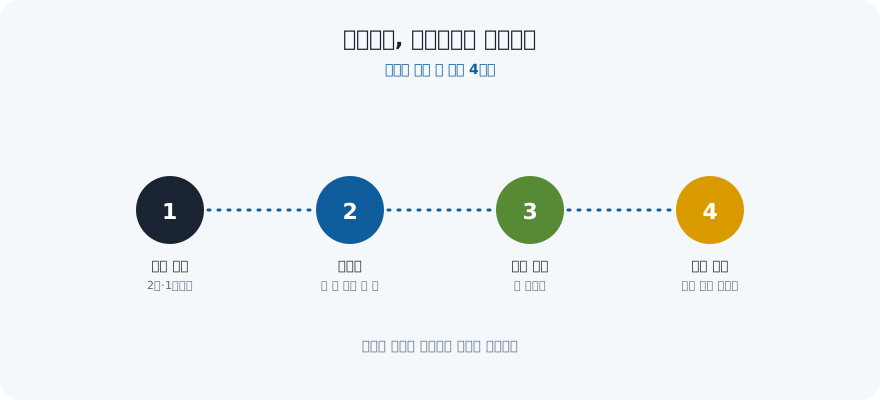
Where to Start with Self-Improvement — A First Routine for Beginners
"I want to change, but I don't know where to begin." That's the most common place to get stuck. This is a beginner-friendly first routine: pick one small thing, build a system instead of relying on willpower, and connect it to a vision so it actually lasts.
Read →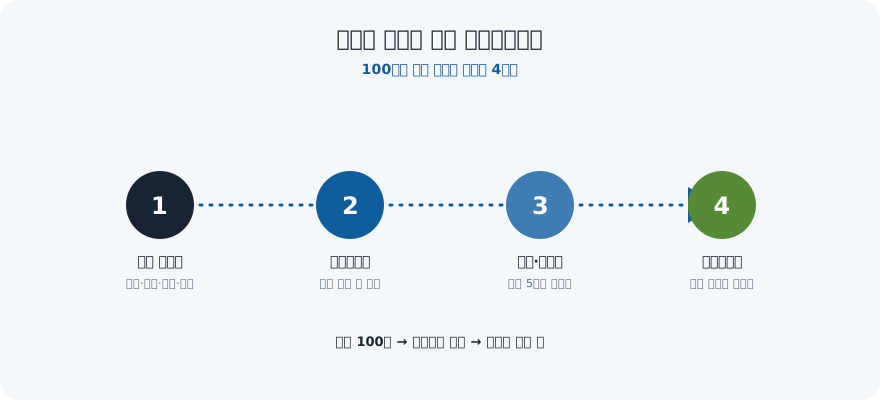
How to Write a Bucket List — 100 Ideas and a Method That Actually Works
A bucket list isn't just a pretty wish list. Done right, it's a map of the life you want — and a launchpad for action. Here's how to write 100 items without running dry, turn them into real goals, and connect them to a vision board, with examples.
Read →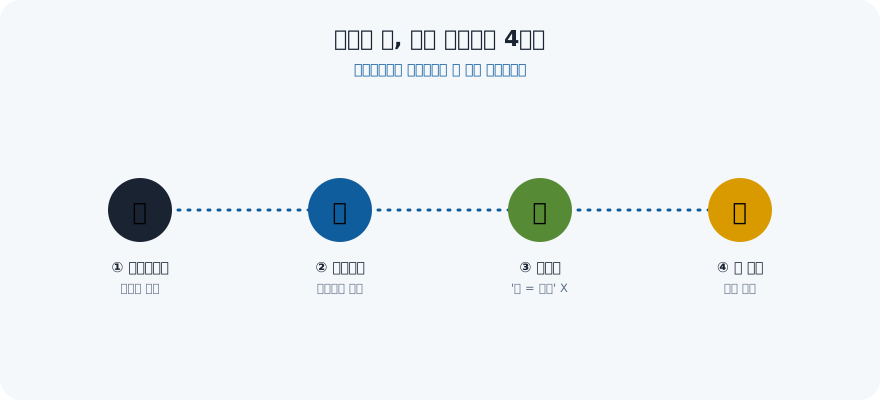
After You Fail — How Self-Compassion Restarts You Faster Than Self-Criticism
Beating yourself up after a setback feels productive, but it keeps you stuck. Self-compassion isn't soft — it's the faster way back. Here are 4 steps to recover from a failed day and take the next small step.
Read →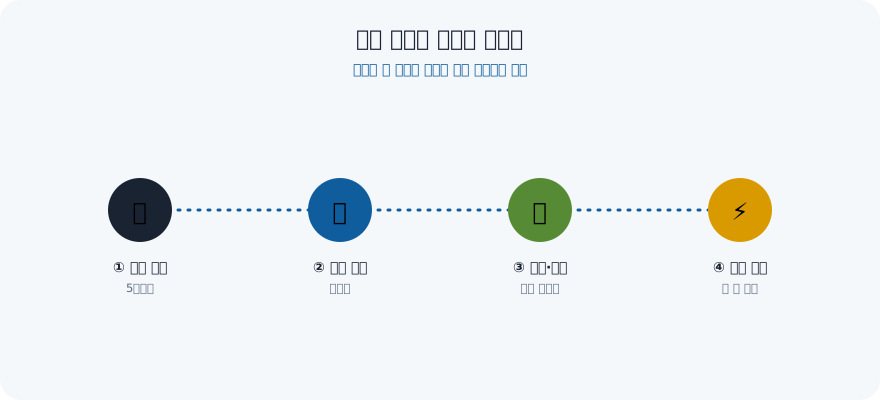
The Power of Small Wins — Why Tiny Progress Beats Big Goals
Motivation doesn't come from huge results — it comes from small wins you can feel today. Here's the science of why tiny progress fuels momentum, and how to engineer a streak of small wins that carries you to the big goal.
Read →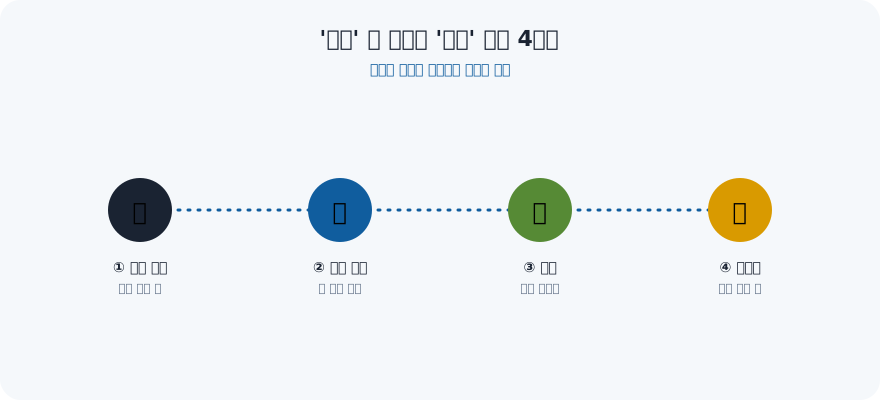
Identity-Based Habits — Don't Just Do It, Become It
Most habits fail because they're tied to a goal, not an identity. When you shift from 'I want to run' to 'I'm a runner,' every small action becomes a vote for who you are. Here's how to build habits that actually stick.
Read →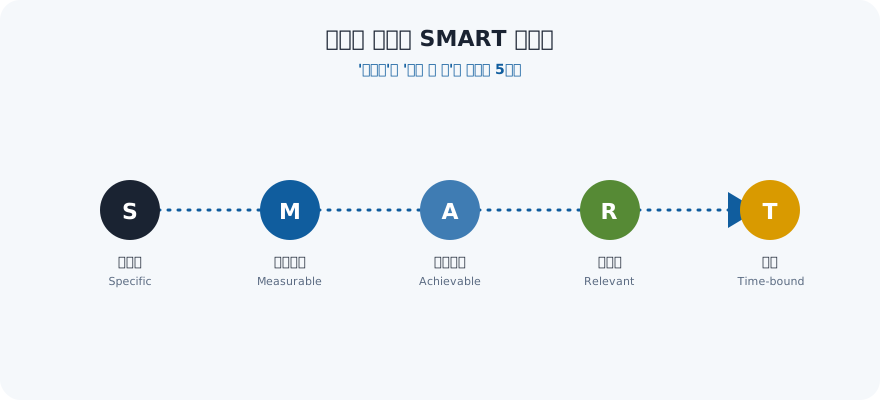
How to Set SMART Goals — One Sheet of Paper, 15 Minutes, 'Someday' Becomes 'Today'
A wish isn't a goal. Here's the 15-minute paper worksheet that turns a vague 'someday' into today's task: how to pick the number for the M in SMART, the 4 ways goals collapse (and how to diagnose yours), a 3-step recovery when it breaks in week two, and when to use SMART vs OKR vs backcasting.
Read →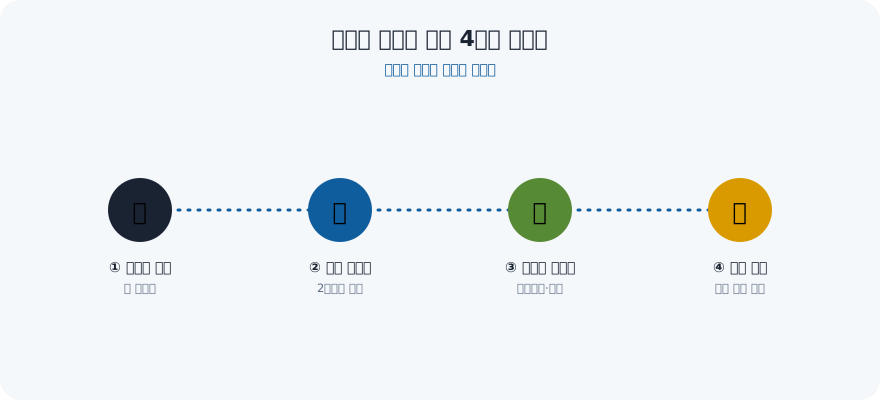
When You Have No Motivation — 4 Systems That Don't Rely on Willpower
Waiting to feel motivated is why you never start. Motivation is a result of action, not a prerequisite for it. Here are 4 systems that get you moving when the feeling isn't there — and keep you going after.
Read →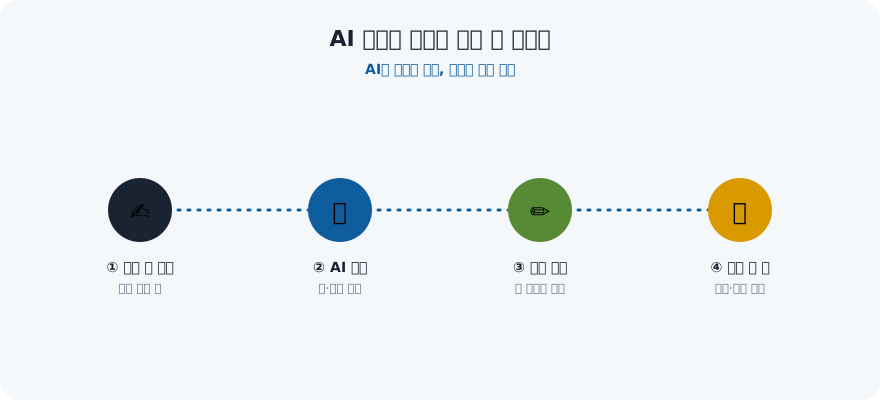
How to Use an AI Coach — Design Vision to Today's Task in One Minute
An AI coach won't live your life for you, but it can turn a blank page into a real plan in a minute. Here's how to use one well: write your vision, let AI draft the tree, edit it into your own, and land it on today's task.
Read →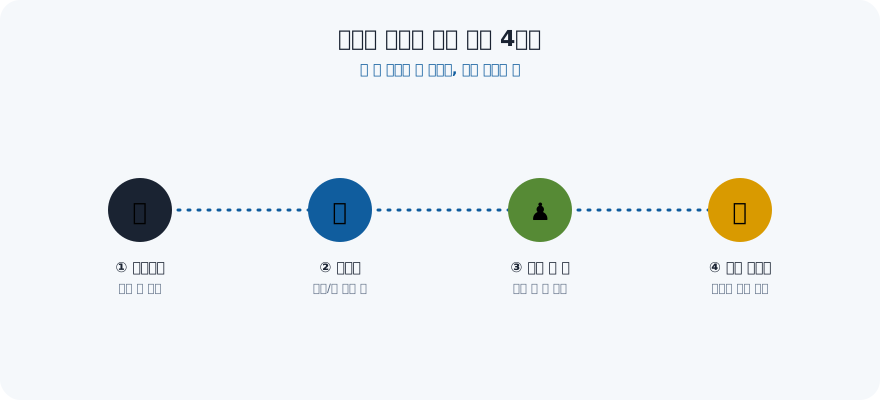
How to Do a Weekly Review — The Loop That Keeps Plans Alive (KPT)
A plan you set once and never revisit quietly dies. The weekly review is the loop that keeps it alive. Here's a simple 4-step weekly review (with the KPT frame) and how to realign it with your vision in 10 minutes.
Read →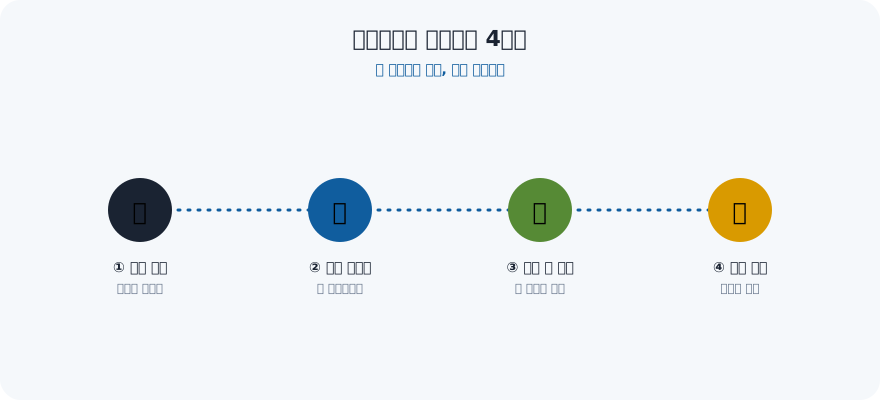
How to Recover from Burnout — Stop Forcing It, Reconnect Instead
Burnout isn't laziness or weakness — it's what happens when you carry too much, alone, for too long. Here are the 4 stages of recovery and how to rebuild momentum with the smallest possible step instead of a bigger goal.
Read →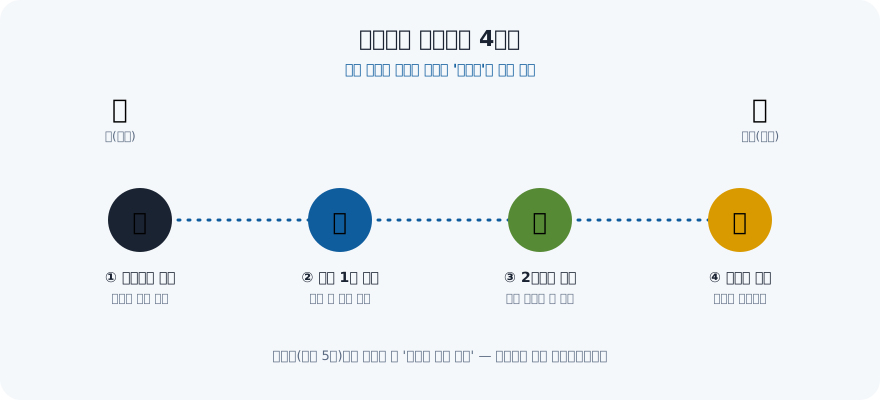
Why the Miracle Morning Ends as a Three-Day Resolution — System, Not Willpower
The Miracle Morning collapses within days because it leans on the 'willpower' to wake up early alone. Here are four system principles that keep a morning routine going, plus how even a night owl can design it without failing.
Read →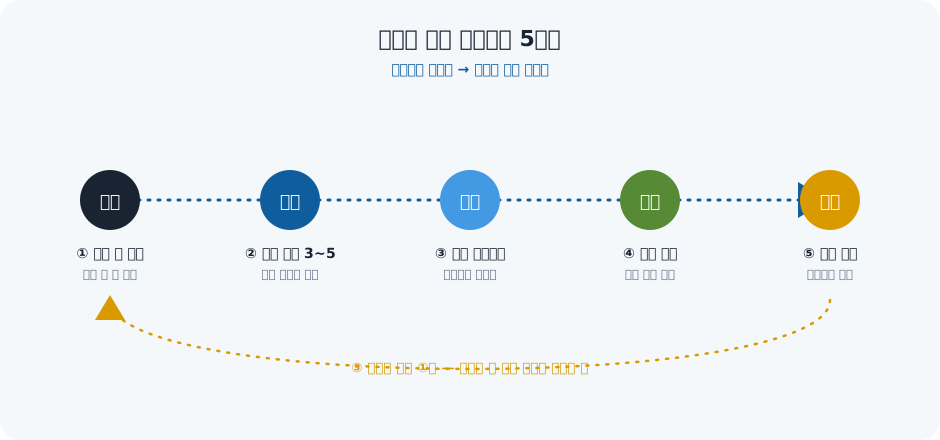
How to Set New Year's Goals — A 5-Step Annual Plan That Won't End as a Three-Day Resolution
If your New Year's resolutions fizzle out every year, it's not because your willpower is weak — it's because the 'design' is missing. Here's a 5-step annual plan that connects your vision all the way down to today's to-dos, plus how to design your whole year in one minute with AI.
Read →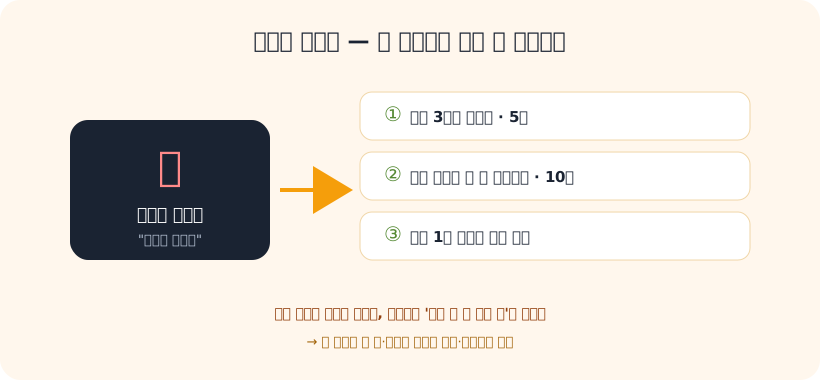
Fear Buster: How to Beat Procrastination and Challenge Anxiety
Do you keep putting things off before a presentation, a new challenge, or an important decision? Fear isn't something you crush with willpower — it disappears when you 'break it down into small, manageable steps.' Here's the real cause of the procrastination mindset, a 4-step method to deconstruct fear, and how to use the AI Fear Buster.
Read →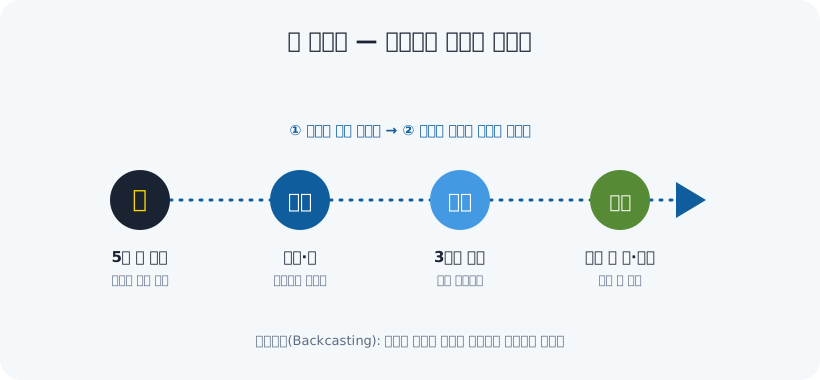
What Is Dream Backcasting? Plan Backward from Your Future to Today in 5 Steps (30-Minute Worksheet)
Backcasting (dream backcasting) is a goal-setting method that first decides the future you want, then designs backward to today's to-dos. Here's how it differs from forecasting, a one-page 30-minute worksheet (5+5+5+10+5), the 5-step method, three worked examples, and the five places backcasting usually breaks — with a fix for each.
Read →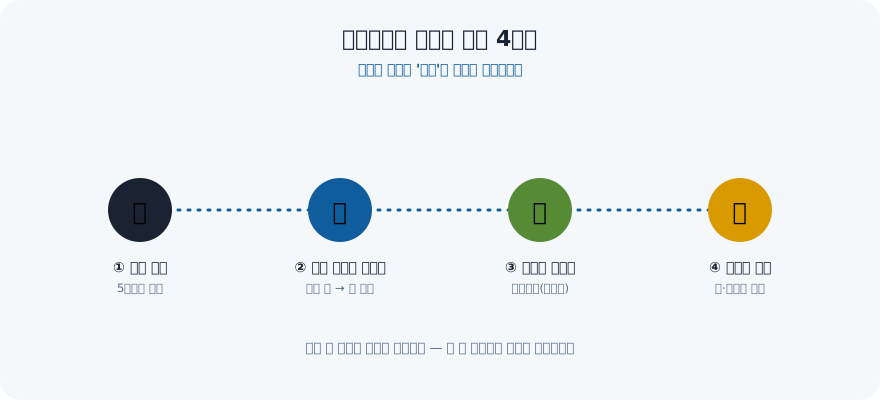
Designing Habits That Beat the Three-Day Resolution — Systems, Not Willpower
A three-day resolution (작심삼일) isn't a willpower problem — it's a design problem. Four principles that make habits stick, plus how to use the Seowoo Vision Dream habit tracker.
Read →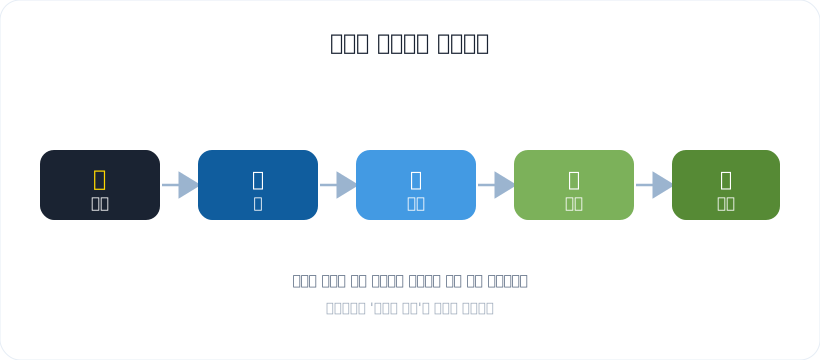
How to Make a Vision Board That Works — Pinning It Up Isn't the End
The conditions for an effective vision board and the 5 steps to build one. Why vision boards that only pin pictures fail, and how to connect them to dreams, goals, and habits.
Read →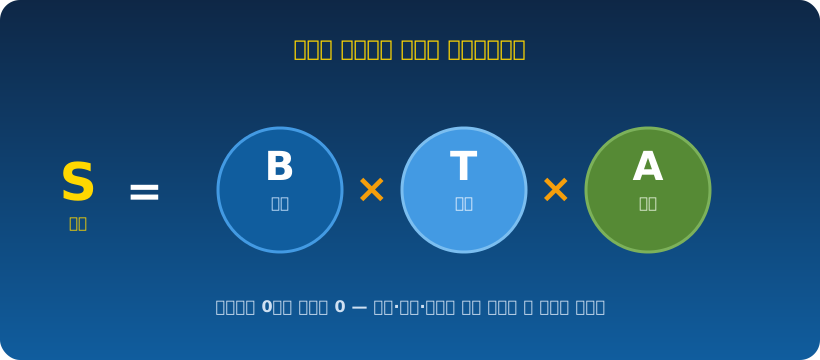
Success Is Multiplication, Not Addition — Success(S) = Belief(B) × Thinking(T) × Action(A)
An introduction to Seowoo's Success Formula, Success(S) = Belief(B) × Thinking(T) × Action(A). Why a 'connected system' rather than willpower creates success, and how to link your vision to everyday action.
Read →