Growth Mindset vs Fixed Mindset — The 3 Reactions That Reveal Which One You Have
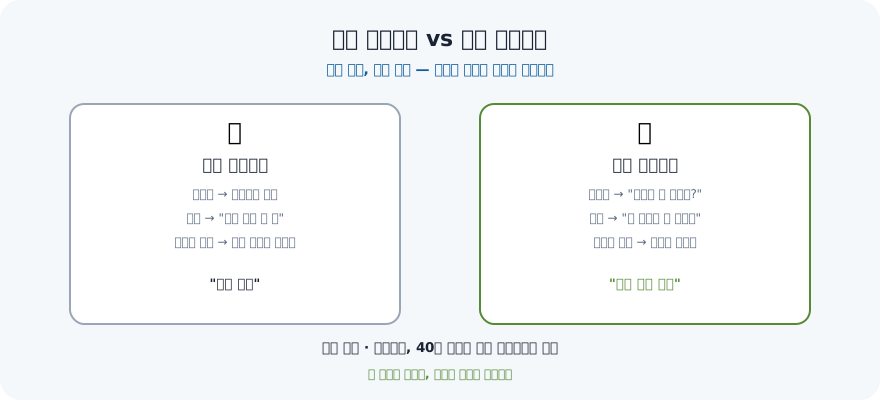
"I'm just not built for this." How many times have you said that this week? In 1978, a psychologist at Stanford University handed elementary schoolers a set of problems that got quietly harder. Faced with the same tough problem, the kids split into two camps — one group decided "I guess I really can't do this" and gave up, while the other leaned in harder, thinking "okay, this approach isn't working, let me try something else." Same failure, completely different reaction. What separated them wasn't talent. It was mindset.
That psychologist was Carol Dweck. After tracking this divide for more than four decades, her conclusion is simple: whether you see ability as a fixed trait you're born with or something you can grow completely changes how you behave in the face of failure. And unlike a personality trait, this mindset isn't locked in — once you notice it, you can start shifting it today.
Key takeaways
- Fixed mindset = ability is innate. Growth mindset = ability is something you build.
- Stanford psychologist Carol Dweck tracked this divide for over 40 years, starting in 1978
- The two mindsets diverge at 3 specific moments: feedback, failure, and difficult tasks
- Growth mindset isn't a magic fix — Dweck herself warned against a "false growth mindset" that only praises effort
- The shift starts with one word habit — adding "yet" after "I can't"
- You can rewrite failure as data, not a verdict, using a 5-step process
Fixed Mindset vs Growth Mindset — Side by Side
These aren't personality types — they're two different lenses for interpreting the same situation. One person can hold both at once, depending on the domain. You might have a growth mindset at work and a fixed one in relationships.
| Fixed Mindset | Growth Mindset | |
|---|---|---|
| View of ability | Innate talent, doesn't change | Grows through effort and strategy |
| Meaning of failure | A verdict on my limits | Data that this method didn't work |
| View of effort | Something only untalented people need | The process that builds ability |
| Watching others succeed | Feels like a threat | Feels like material to learn from |
| Facing a hard task | Avoid it, pick the easy one | Take it on as a challenge |
| Go-to phrase | "I'm just not built for this" | "I can't do this yet" |
Carol Dweck's 40-Year Research — What She Found
Dweck's original 1978 experiment was simple. She gave elementary schoolers a set of solvable problems, then slipped in ones that were deliberately too hard. The moment a kid hit that wall, their reaction split into two camps — and the split had nothing to do with intelligence or past grades. It tracked something else entirely: how the kid interpreted failure.
Later research added harder evidence. In a 2006 study led by Jennifer Mangels using ERP (brain wave) measurements, participants with a growth mindset showed sharply more brain activity at the exact moment they checked a wrong answer and learned the right one. Fixed-mindset participants, by contrast, mostly lit up in response to information that felt like a judgment of their ability — and quietly missed the chance to learn from their own mistakes. In other words, the two mindsets aren't just a difference in attitude. They're a difference in how much you actually learn from the same failure.
Dweck's follow-up "not yet" grading study is famous for a reason. In schools where a failing grade was marked "Not Yet" instead of flatly "Fail," students retried more often and their eventual performance improved noticeably. Swapping one word — a verdict-sounding word for a progress-sounding one — was enough to change how students actually behaved.
The 3 Moments Where Reactions Diverge
Growth mindset isn't an abstract attitude. It shows up visibly at three specific moments. Think back on today — which way did you lean at each one?
| Situation | Fixed mindset reaction | Growth mindset reaction |
|---|---|---|
| Receiving feedback | Enjoys praise, deflects or avoids criticism ("that's just how I am") | Treats criticism as information, asks "so what do I change next?" |
| After failing | Jumps straight to "I guess I'm just not good at this" | Narrows it to "this method didn't work" and separates the attempt from the self |
| Facing a hard task | Avoids it to dodge looking incompetent | Deliberately picks a task slightly above current skill (the effort itself is proof of growth) |
The common thread across all three: a fixed mindset reads the outcome as a judgment of who you are, while a growth mindset reads it as information for next time. Same event, different meaning attached to it.
30-Second Self-Check
Whichever answer you say "yes" to more often is your default reaction right now. This can vary by domain, so pick one recent situation that stressed you out and answer with that in mind.
- When I get criticized, my first instinct is to explain or defend myself → fixed-mindset signal
- When I see someone doing well, my first thought is curiosity ("how did they get there?") rather than feeling small → growth-mindset signal
- Before trying something new, "what will I learn from this" comes to mind before "what if I fail" → growth-mindset signal
If you landed on fixed-mindset answers across the board, that's not a verdict either. Mindset isn't a personality trait — it's a repeated habit, which means it starts changing the moment you notice it.
5 Steps to Shift Into a Growth Mindset
These aren't grand resolutions — they're small, sequential moves. You don't need to do all five at once. Just step 1 this week is enough.
Step 1 — Catch the fixed-mindset sentence
Notice the moment a phrase like "I'm just not built for this" or "they're just naturally talented" comes out of your mouth. Noticing it is already half the work.
Step 2 — Add "yet" to the end
Turn "I can't do this" into "I can't do this yet." One word, but it turns a verdict into a work in progress — this is exactly what Dweck's "not yet" grading study demonstrated.
Step 3 — Rewrite failure as data, not a verdict
Instead of "I'm bad at presenting" (a verdict), get specific: "I lost eye contact with the audience during the intro this time" (data). Data can be fixed next time. A verdict can't.
Step 4 — Pick a task just slightly above your current level
A task that's too easy doesn't build evidence, and one that's too hard just leaves you discouraged. Deliberately choose something one notch above where you are now, and let the effort itself become proof you're growing.
Step 5 — Write it down
A shift isn't a single decision — it hardens through repeated evidence. Even one line about when you said "yet" today, or how you turned a failure into data, gives you something to pull back out next time.
The Growth Mindset Trap — Praising Effort Alone Backfires
Here's a common misunderstanding worth flagging. "Just try hard and it'll work out" can quietly become its own kind of fixed thinking. Dweck herself warned about this directly in a 2016 interview — praising effort alone regardless of outcome, or glossing over failure with a blanket "good job anyway," isn't growth mindset. It's what she calls a "false growth mindset."
Real growth mindset doesn't glorify effort unconditionally. It recognizes that effort only turns into growth when it's paired with strategy. Repeating a method that isn't working ten times over isn't effort — it's stagnation. The growth-mindset question isn't "should I try harder?" It's "should I try differently?"
🌱 Doing This in the VisionDream App
A growth mindset doesn't grow from a declaration — it grows from small, repeated evidence. VisionDream's Success Tree grows from seed to sprout to sapling to full tree to fruit as you log XP for every action, giving you visible proof that you're "someone who's growing" instead of "someone who just can't." Every Sunday, the Weekly Review has you sum up the week in three lines — what went well, what didn't, what you learned — turning a failure into reviewable data instead of a reason for self-blame. And on the days when perfectionism makes you want to quit entirely after missing one day, two streak protections are used automatically each month to keep your record intact — cutting down on exactly the moment a fixed mindset loves most: "yeah, I knew I couldn't do it."
Ability isn't a report card handed to you at birth — it's a sentence still being written, right now. Today, try adding just three letters — "yet" — after "I can't." That one word is what makes the next attempt possible. Whatever you failed at before, try restarting with one small win. Repetition becomes grit, and grit is what actually rewrites the mindset. Plant your vision, and the fruit will come. 🌱
Frequently Asked Questions
What exactly is a growth mindset?
It's the view that ability and intelligence aren't fixed traits you're born with, but things you can build through effort and strategy. Stanford psychologist Carol Dweck developed the concept over more than 40 years of research starting in 1978. Its counterpart is the 'fixed mindset' — the view that ability is innate talent. Neither is a personality trait; both are habits of interpreting feedback, failure, and difficult tasks, which means they can change once you notice them.
Is mindset something you're born with, or can it change?
It changes. Mindset isn't a personality trait — it's a repeated habit of interpretation. In Dweck's research, simply marking a failing grade as 'Not Yet' instead of 'Fail' was enough to raise how often students retried and how well they eventually performed. Changing a single word, repeated consistently, is enough to shift a mindset. That said, it can vary by domain within the same person — you might have a growth mindset at work but a fixed one in relationships.
If I have a growth mindset, does that mean I just need to try harder?
No. Carol Dweck herself warned against this exact misreading in a 2016 interview. Praising effort alone regardless of outcome is a 'false growth mindset,' and repeating a method that isn't working isn't effort — it's stagnation. A real growth mindset only turns effort into growth when it's paired with strategy. The core question isn't 'should I try harder?' It's 'should I try differently?'
How do I know whether I lean fixed or growth mindset?
Watch your reaction at three moments: feedback, failure, and difficult tasks. If you get defensive at criticism, jump straight to 'I'm just not good at this' after failing, and avoid hard tasks to dodge looking incompetent, those are fixed-mindset signals. If you take criticism as information, narrow failure down to 'this method didn't work,' and deliberately pick tasks slightly above your level, those are growth-mindset signals. Try the 30-second self-check above using one recent stressful situation.
How does VisionDream help with shifting to a growth mindset?
The Success Tree grows from seed to full tree as you log XP for every action, giving you visible proof that you're 'growing' rather than 'someone who can't.' The Sunday Weekly Review has you reframe the week's failures in three lines — what went well, what didn't, what you learned — practicing the exact skill of reading failure as data. And two streak protections are used automatically each month, so missing one day doesn't trigger the fixed-mindset spiral of 'I knew I couldn't do it.'
Plant a vision, and fruit will surely grow 🌱
Start in the app →Related posts
- 🛡️How to Build Mental Strength — The 4-Week Drill That Starts With Timing Your Recovery
- 🦥How to Overcome Laziness — It's Not a Character Flaw, It's a Signal
- 🪨Grit and Consistency — Why the Person Who Lasts Beats the Talented One
- 🙏Gratitude Journal — Three Lines a Day, 25% Happier in Studies. So Why Does Everyone Quit by Day Three?