How to Beat a Slump — Jump-Starting When Your Motivation Is at Zero
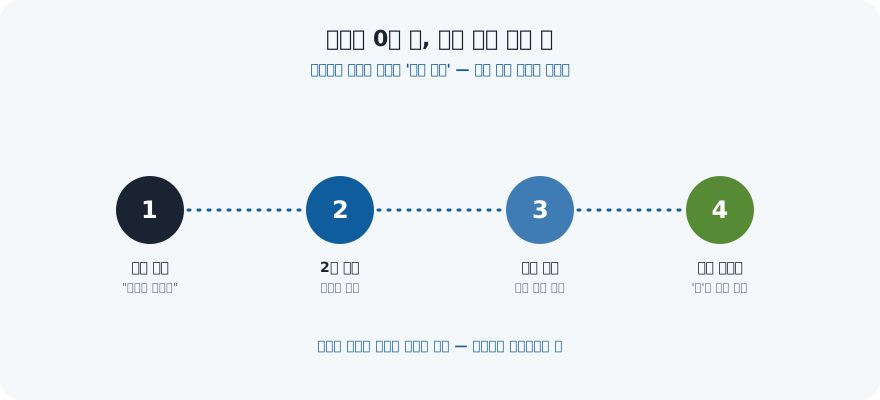
Some mornings you know exactly what to do — and you just can't make yourself start. No energy, no interest, no spark. It's easy to read that as laziness or a character flaw. It isn't. A slump is a stalled engine, not a broken one. And you don't restart an engine by yelling at it. You give it a small turn of the key.
Key takeaways
- A slump is low drive, not a moral failure — waiting to "feel like it" keeps it stuck
- Action comes before motivation, not after — a 2-minute start primes the spark
- Your environment pulls harder than your willpower — change the room, not your character
- Reconnecting today's tiny step to your vision is what refills the tank
What a slump actually is
A slump isn't the same as burnout. Burnout is depletion — you've spent everything and have nothing left. A slump can hit even when you're rested: the tank isn't empty, the engine just won't turn over. The trap is the same belief that stalls both — I'll start once I feel motivated. But motivation is not the spark plug; it's the exhaust. It shows up after you move, not before. If the stall repeats only on specific tasks rather than across your whole life, that's less likely a slump and more likely laziness (a signal) — the fix is different.
| Waiting for motivation | Jump-starting |
|---|---|
| "I'll start when I feel like it" | "I'll feel like it once I start" |
| Wait for a big wave of energy | Give the engine a 2-minute turn |
| Blame your willpower | Change your environment |
| Drifting from your "why" | Reconnect today to your vision |
Take a 2-minute action — before you feel ready
The fastest way out of a slump is to make the first step so small it's almost silly. Not "work out," but "put on your shoes." Not "write the report," but "open the file and type one line." Two minutes. The point isn't the two minutes — it's that motion creates motion. Once the engine turns over, momentum does the rest. (When the task feels too big to even look at, shrink it with the fear deconstructor until starting feels safe.)
And if you stall again tomorrow? That's normal. Drop the self-blame — guilt is a brake, not a gas pedal. Treating yourself with self-compassion is what keeps you willing to try again.
Change the room, not your character
When you can't make yourself act, don't reach for more discipline — reach for a better environment. Willpower is a weak, tired muscle; your surroundings work for free, all day. Put the guitar on its stand, not in the case. Lay tomorrow's clothes out tonight. Leave the book open on your pillow. Move to a café where the only thing to do is the thing. You're not weak for needing this — you're smart for designing around it.
Reconnect to your vision
A slump is often a quiet signal that today's grind has drifted from why you started. Tasks pile up, the "why" fades, and the engine loses its reason to run. Go back to the bigger picture for sixty seconds: what future were you reaching for? Reattaching one small step to a vision you actually care about is what turns effort back into energy. (This is the same logic behind building a motivation that doesn't rely on willpower.)
How VisionDream jump-starts you
VisionDream is built for the days when motivation is at zero. The vision board mirrors back why you started, so today's task carries meaning again. The 🦁 fear deconstructor shrinks an overwhelming task into a two-minute first step. And the habit tracker with the success tree rebuilds a gentle streak — visible proof that the engine is running again, without grinding yourself down.
You don't have to feel ready. You just have to turn the key once. Plant your vision, and the fruit will come. 🌱
Frequently Asked Questions
What's the difference between a slump and burnout?
Burnout is depletion — chronic exhaustion of mind and body after demands outran recovery for too long. A slump is low drive: the tank isn't necessarily empty, the engine just won't turn over, and it can hit even when you're rested. A slump usually responds to a small jump-start; burnout needs real rest and permission to stop first.
What's the first action to take when I have zero motivation?
Pick something so small it feels almost silly — put on your shoes, open the file and type one line, two minutes only. Don't wait to feel motivated first; motivation shows up after you move, not before. Motion creates motion, and momentum handles the rest.
How long does a slump usually last?
There's no fixed length — it depends on the cause and what you do next. The key is not to wait passively for it to lift. A tiny daily action plus a changed environment usually shortens it, while self-blame and 'try harder' tend to drag it out.
How does VisionDream help with a slump?
It reconnects today's small step to your vision so effort regains meaning, uses the fear deconstructor to shrink overwhelming tasks into two-minute starts, and rebuilds a gentle streak with the habit tracker and success tree. A system carries you when willpower can't.
Plant a vision, and fruit will surely grow 🌱
Start in the app →Related posts
- 🛡️How to Build Mental Strength — The 4-Week Drill That Starts With Timing Your Recovery
- 🦥How to Overcome Laziness — It's Not a Character Flaw, It's a Signal
- 🪨Grit and Consistency — Why the Person Who Lasts Beats the Talented One
- 🌱Growth Mindset vs Fixed Mindset — The 3 Reactions That Reveal Which One You Have