Where to Start with Self-Improvement — A First Routine for Beginners
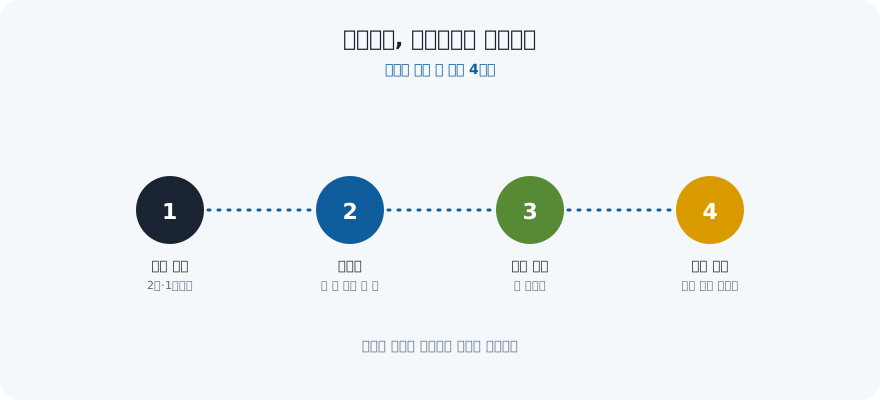
"I want to better myself, but I have no idea where to start." If that's you, you're not behind — you're at the most normal starting line there is. The mistake most beginners make isn't laziness; it's trying to fix ten things at once with sheer willpower. The way out is the opposite: start absurdly small, with one thing, on a system that runs without you having to feel motivated.
Key takeaways
- The block isn't willpower — it's trying to change everything at once
- Start with one small thing, not a ten-item overhaul
- Build a system (a fixed time and place) instead of relying on mood
- Connect the habit to a vision, or it fades in a week
Willpower runs out — a system doesn't
Most people start self-improvement by promising to "try harder." But willpower is a battery that drains over a day. By evening, the resolve you woke up with is gone, and you blame yourself instead of the plan. A system removes that dependency: you decide once when and where a small action happens, and then you stop negotiating with yourself every day.
| Willpower approach | System approach |
|---|---|
| "I'll work out more" | "Stretch by my bed right after waking" |
| Depends on mood | Runs on a fixed cue |
| Restarts from zero daily | Carries momentum forward |
| Guilt when you slip | A missed day is just a missed day |
The shift sounds small, but it's everything. A habit tied to a cue — after I pour my coffee, I read one page — survives the days you don't feel like it. (This is the heart of habits that beat the three-day quit.)
Start with one thing, not ten
The beginner's instinct is to redesign their whole life on Monday: wake at 5am, exercise, journal, read, eat clean. By Wednesday it collapses, and the collapse feels like proof you "can't change." You can — you just overloaded the runway. Pick one keystone habit small enough that it's almost embarrassing: two minutes of stretching, one page, a glass of water. The goal at the start isn't results; it's proving to yourself that you do what you say you'll do.
Once one small habit holds for two weeks, it becomes an anchor you can stack the next thing onto. Identity grows from evidence, not from declarations — every kept promise quietly tells you I'm someone who follows through. (More on that in identity-based habits.)
Connect it to a vision, or it fades
Here's why most beginner routines die even when they're small: they float, disconnected from anything that matters to you. "Read one page" is easy to drop because nothing's riding on it. But "read one page — because I want to become someone who thinks clearly and builds things" is harder to abandon. A vision gives the small action a reason, and reasons are what carry you past week one.
So before you obsess over the perfect routine, spend ten minutes on the question above it: who am I trying to become this year? Even a rough answer turns a random habit into a step on a path. (If that feels abstract, a vision board makes it concrete.)
How VisionDream gives beginners a first routine
The trap for beginners is keeping the vision in your head, the goal in a notes app, and the habit nowhere. VisionDream connects all three: you name a vision, break it into one or two habits small enough to actually keep, and check them off daily while a Tree of Success grows with your streak. When you stall, the AI coach helps you shrink the step until it's doable again — so you start, instead of waiting to feel ready. (Beginners often pair this with the AI coach for the first week.)
You don't need to fix everything today. Pick one small thing, tie it to who you want to become, and do it once. Plant your vision, and the fruit will come. 🌱
Frequently Asked Questions
Where should a beginner start with self-improvement?
Start with one small habit, not a full life overhaul. Pick something so small it feels almost trivial — two minutes of stretching, one page of reading, a glass of water — and attach it to a fixed cue like 'right after I wake up.' The first goal isn't results; it's proving to yourself that you follow through.
What's the most common beginner mistake?
Trying to change ten things at once on pure willpower. The overload collapses within days and feels like proof you 'can't change,' when really you just gave yourself too much. Start with one keystone habit, let it hold for two weeks, then stack the next thing on top of it.
How many days until a routine sticks?
There's no magic number, but most small habits start to feel automatic somewhere between two and a few weeks of consistent repetition. What matters more than the exact count is not breaking the chain too early — keep the habit small enough that a busy day can't knock it out.
How does VisionDream help a beginner?
It connects your vision, goals, and daily habits in one place, so a small habit isn't floating — it's a step toward who you want to become. You check habits off daily, watch a Tree of Success grow with your streak, and lean on an AI coach that shrinks the step whenever you stall.
Plant a vision, and fruit will surely grow 🌱
Start in the app →Related posts
- 📲Goal-Tracking Apps — How to Pick One and Actually Finish Your Yearly Goals
- ⏰How to Stop Procrastinating — Break the Habit With Systems, Not Willpower
- 🖼️How to Make a Digital Vision Board on Your Phone (So You Actually See It Daily)
- 🌄5 Miracle Mindsets That Change Your Morning — Why Willpower Fails and What Works Instead