Mindfulness for Beginners — Three Minutes to Steady Your Mind and Return to Your Vision
The word "mindfulness" can sound intimidating — incense, an hour on a cushion, an empty mind. But that's not what it is, and you don't need any of it. Mindfulness is simply this: staying with the present moment, on purpose, without judging it. That's the whole thing. And the payoff isn't just calm for calm's sake — a steadier mind is a mind that can stop spinning and get back to your goals. This is a practical skill, not a mystical one, and three minutes is enough to start.
Key takeaways
- Mindfulness isn't emptying your mind — it's noticing the present without judging it
- You don't need silence or an hour; three minutes of breathing counts
- The goal isn't to stop thoughts, but to stop being dragged by them
- A calmer mind is one that can reconnect to your vision instead of spinning
A scattered mind vs. a mindful one
Most of the day your mind runs on autopilot — replaying the past, rehearsing the future, reacting to every ping. That's not a character flaw; it's just what an untrained mind does. Mindfulness doesn't switch the mind off. It gives you a half-second gap between what happens and how you respond — and that gap is where you get your choices back.
| A scattered mind | A mindful mind |
|---|---|
| Runs on autopilot, all day | Notices what's happening, on purpose |
| Dragged by every thought | Sees the thought, lets it pass |
| Reacts instantly, then regrets | Pauses, then chooses |
| Anxiety leaks into everything | Steadies, then returns to what matters |
What mindfulness actually is
Mindfulness is paying attention to the present moment on purpose, and doing it kindly. Not "clear your head" — that's impossible and it isn't the point. The practice is to notice where your attention is (usually somewhere in the past or future) and gently bring it back to right now: your breath, your feet on the floor, the sounds in the room. You'll drift a hundred times. Bringing it back — that's the rep. Being gentle about it is the whole skill, which is why mindfulness pairs so naturally with treating yourself with self-compassion instead of self-criticism.
The three-minute breath
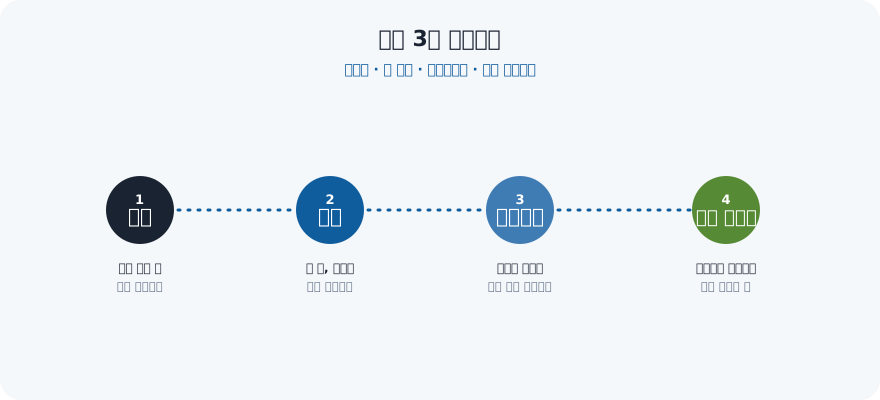
Here's the simplest practice there is. Set a timer for three minutes.
- Pause. Stop what you're doing and sit however you are. Nothing to fix.
- Breathe. Take slow breaths and put your attention on the feeling of the air — in, and out. Try counting: in for four, out for six.
- Notice and return. Your mind will wander. The moment you catch it, that's not failure — that's the practice working. Gently walk your attention back to the breath.
That's it. Three minutes, no app, no cushion required. Do it once a day and it becomes a small anchor you can drop anytime the day gets loud. If sitting still feels impossible some days, that's often a signal you're running on empty — worth reading alongside recovering from burnout.
Noticing thoughts without being run by them
The biggest misunderstanding is thinking mindfulness means having no thoughts. Thoughts will keep coming — that's healthy. The skill is watching them arrive without climbing aboard every one. A useful move: when a thought shows up, quietly name it — "planning," "worrying," "remembering" — and let it float by like a cloud. Naming it creates just enough distance that the thought stops being an order you must obey and becomes something you can simply observe. Over time, that same distance is what keeps a hard day from turning into a full-blown slump. And this naming-and-releasing move works at your desk too — the "parking-lot note" in how to improve focus is simply the paper version of this same skill. If you want to train this noticing more systematically, vipassana — the original form of mindfulness — is a good next step: the noting word list, a 4-week 10-minute routine, and how to choose between a one-day retreat and a 10-day course are all in Vipassana Meditation for Beginners.
Coming back to your vision
Here's why this matters for a self-improvement journey, not just for relaxation. When your mind is scattered and anxious, your vision disappears from view — you can't aim at a target you can't see. Three minutes of steadying does something quietly powerful: it clears the noise enough that you can look up and remember what you're actually working toward. Mindfulness isn't the destination. It's the pause that lets you reconnect to your goals with a calmer, clearer head — and then take the next small step.
How VisionDream turns the pause into progress
A calm moment is only worth so much if it evaporates. VisionDream is built to catch that clarity and point it forward: after you steady yourself, your vision board is right there to remind you what you're aiming at, your habit tracker turns "I'll be calmer" into a daily check-in you can actually keep, and your AI coach helps you name what's spinning and choose the next step. When a wave of stress hits, the fear-deconstruction tool helps you look at it directly instead of being swept along, and your weekly review lets you notice the pattern over time. The pause steadies you; the app makes sure you use that steadiness to keep moving — which is exactly how a small calm becomes a durable motivation system.
You don't need to empty your mind or find an hour. Just pause, take three breaths, notice where you are — and then turn back toward what matters. Plant your vision, and the fruit will come. 🌱
Frequently Asked Questions
What is mindfulness, in simple terms?
Mindfulness is paying attention to the present moment on purpose, without judging it. It isn't about emptying your mind or reaching some blissful state — it's simply noticing where your attention is and gently bringing it back to right now, whether that's your breath, your body, or the sounds around you. It's a practical skill anyone can build, not a mystical one.
How do I start meditating as a beginner?
Start with three minutes. Set a timer, sit however you are, and put your attention on your breath — try counting in for four and out for six. Your mind will wander; the moment you notice, gently return to the breath. That noticing-and-returning is the whole practice. You don't need silence, an app, or a cushion to begin.
Isn't mindfulness about having no thoughts?
No — that's the most common misunderstanding. Thoughts will keep coming, and that's healthy. The skill is watching them arrive without climbing aboard every one. A helpful trick is to quietly name a thought ('planning,' 'worrying') and let it float by. That small distance means the thought stops being an order you obey and becomes something you can simply observe.
How does mindfulness connect to reaching my goals?
When your mind is scattered and anxious, your vision disappears from view — you can't aim at a target you can't see. A few minutes of steadying clears enough noise that you can look up, remember what you're working toward, and take the next small step. In VisionDream, that pause connects straight to your vision board, habits, and AI coach so a calm moment turns into real progress.
Plant a vision, and fruit will surely grow 🌱
Start in the app →Related posts
- 🛡️How to Build Mental Strength — The 4-Week Drill That Starts With Timing Your Recovery
- 🦥How to Overcome Laziness — It's Not a Character Flaw, It's a Signal
- 🪨Grit and Consistency — Why the Person Who Lasts Beats the Talented One
- 🌱Growth Mindset vs Fixed Mindset — The 3 Reactions That Reveal Which One You Have