Designing a Sustainable Daily Routine — A Day System That Doesn't Burn You Out
"Godsaeng" — the productive, self-improving life — looks great on a feed: 5am wake-ups, cold showers, workouts, reading, journaling, all before breakfast. The problem is what the feed doesn't show: a week or two later, the whole stack collapses. When a routine demands heroic willpower every day, it isn't a system — it's a countdown to burnout. A routine that lasts isn't the most impressive one; it's the one so light you'd feel silly skipping it. This post is about designing that kind of day.
Key takeaways
- A pile of ambitious habits isn't a routine — it's a countdown to burnout
- Attach each new habit to something you already do — a small anchor
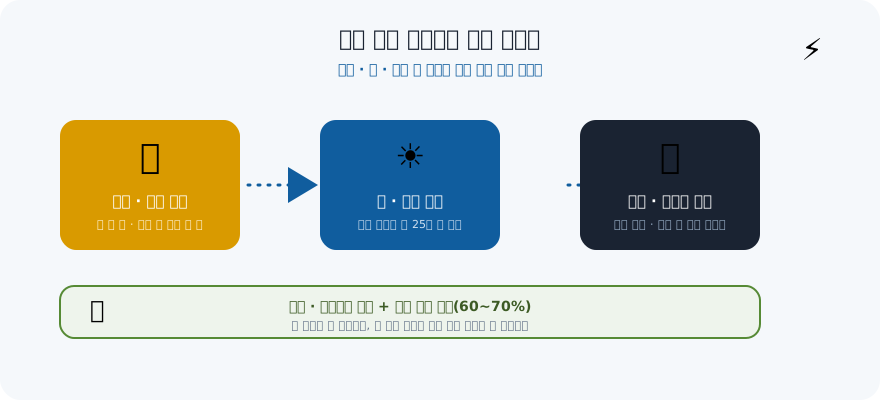
- Design the whole day in three blocks (morning, midday, evening), one anchor each
- Run at 60–70% intensity and tie it to your vision, so it survives a bad day
Why the godsaeng trend backfires
The trend sells intensity — more habits, earlier alarms, longer lists — as if willpower were unlimited. It isn't. Every extra habit you add draws from the same small tank, and when the tank runs dry (a busy week, a bad night's sleep, one hard day), the whole tower comes down at once. Then the story your brain tells isn't "I overloaded the plan," it's "I failed again." That guilt is what actually kills routines. The goal isn't a perfect day you can do once — it's an ordinary day you can repeat for months.
| An overloaded routine | A routine that lasts |
|---|---|
| 7 new habits at once | 1 small anchor per block |
| Runs on daily willpower | Runs on triggers you already have |
| One bad day breaks everything | A bad day dents one block, not the whole |
| 100% intensity, then collapse | 60–70% intensity, sustained |
| "I failed again" | "I'm still going" |
Start with small anchor habits
The reason new habits don't stick is that they float — nothing in your day reminds you to do them. An anchor fixes that: you attach the new habit to something you already do without thinking. Not "meditate for 20 minutes," but "take three slow breaths after I pour my morning coffee." The existing action becomes the reminder, so you spend zero willpower remembering. Keep the habit almost embarrassingly small at first — small enough that you can't talk yourself out of it. Shrinking the habit is exactly how you beat three-day quitting: you remove the friction that makes day four feel impossible.
Design the day in three blocks
Instead of a long to-do list, split your day into three natural blocks and give each one anchor:
- Morning — the start anchor. One tiny action that sets the tone: a glass of water and writing down your single first task. Not the whole plan, just the first move. (The night before is where this really gets decided — see the evening routine.)
- Midday — the focus anchor. One protected block for the most important thing, even just 25 minutes. This is where the day's real work lives, so guard it before the small stuff floods in.
- Evening — the close anchor. Close today and pick tomorrow's first action. This hands your morning self a plan instead of a blank page.
Three anchors, not thirty tasks. Because they're spread across the day and tied to existing triggers, one rough block no longer topples the others — you dent one, not the whole tower.
Keep the intensity gentle
Here's the counterintuitive part: run your routine at 60–70%, not 100%. A day you can only complete when everything goes right is a day you'll fail most weeks. Leave slack. A "minimum version" of each anchor — one breath instead of ten, one line of writing instead of a page — means that even on your worst day you keep the streak alive. Consistency, not intensity, is what compounds; showing up small every day beats showing up huge and quitting. That steady showing-up is the real engine behind grit and consistency.
Connect the routine to your vision
A routine with no "why" is just a chore list, and chore lists get dropped the moment life gets busy. The habits that survive are the ones you see as evidence of who you're becoming — not tasks you owe, but proof of an identity you're building. That's the heart of identity-based habits: you don't run to hit a number, you run because you're becoming a runner. When each small anchor visibly points at the future you want, skipping it feels like stepping away from yourself, not just missing a box.
How VisionDream helps you design a routine that lasts
A day system lives or dies by whether you can see it. VisionDream gives each anchor a home: set your three small anchors as habits you check off, and watch the Tree of Success grow with every day you show up — proof that gentle consistency compounds. The vision board keeps your "why" one glance away, so each anchor stays tied to the future you're reaching for, and when a block wobbles, the AI coach nudges you back with a smaller version instead of guilt. You don't need a heroic day. You need an ordinary one you can repeat. Plant your vision, and the fruit will come. 🌱
Frequently Asked Questions
What does 'godsaeng' mean, and why does it lead to burnout?
Godsaeng is a Korean term for a diligent, self-improving lifestyle — packed mornings, workouts, reading, journaling. It backfires when people stack too many demanding habits at once, because every habit draws from the same limited willpower. One busy week or bad night collapses the whole tower, and the guilt of 'failing again' is what actually ends the routine. The fix is fewer, smaller habits you can repeat.
What is an anchor habit?
An anchor habit is a new habit attached to something you already do automatically — 'three slow breaths after I pour my coffee' instead of 'meditate for 20 minutes.' The existing action becomes the reminder, so you spend no willpower remembering to start. Keeping the new habit very small removes the friction that makes people quit around day three or four.
How do I design a full-day routine without overloading myself?
Split the day into three blocks — morning, midday, evening — and give each just one small anchor: a start action in the morning, one protected focus block midday, and a close-the-day action in the evening. Run each at 60–70% intensity with a 'minimum version' so a bad day dents one block instead of breaking everything. Three anchors tied to existing triggers beat a long to-do list every time.
How does VisionDream help build a sustainable routine?
VisionDream turns your three anchors into habits you can check off, grows a Tree of Success as you show up so gentle consistency becomes visible, and keeps your vision board one glance away so each habit stays tied to your 'why.' When a block wobbles, the AI coach nudges you back with a smaller version instead of guilt — so an ordinary, repeatable day keeps compounding.
Plant a vision, and fruit will surely grow 🌱
Start in the app →Related posts
- ⏰How to Stop Procrastinating — Break the Habit With Systems, Not Willpower
- 🌙The Evening Routine — Ten Minutes Tonight Decides Tomorrow Morning (4-Step, 10-Minute Checklist)
- 🌙How to Do a 5-Minute Daily Review — Stop Grading 'What You Didn't Do' (3-Line Format + Timebox)
- 📔Before You Buy a Planner — 3 Checks That Decide Whether You Finish the Year