How to Stop Procrastinating — Break the Habit With Systems, Not Willpower
The grand resolution never survived past day three. Then one five-minute habit — just one — quietly turned my day, a month later, into something I didn't recognize.
We treat procrastination as a character flaw: I just need more discipline. But that framing is exactly why it never gets fixed. You can't out-willpower a brain that's wired to avoid discomfort. The way out isn't more motivation — it's a system that keeps working on the days you have none.
Key takeaways
- Procrastination isn't a willpower failure — it's your brain avoiding discomfort
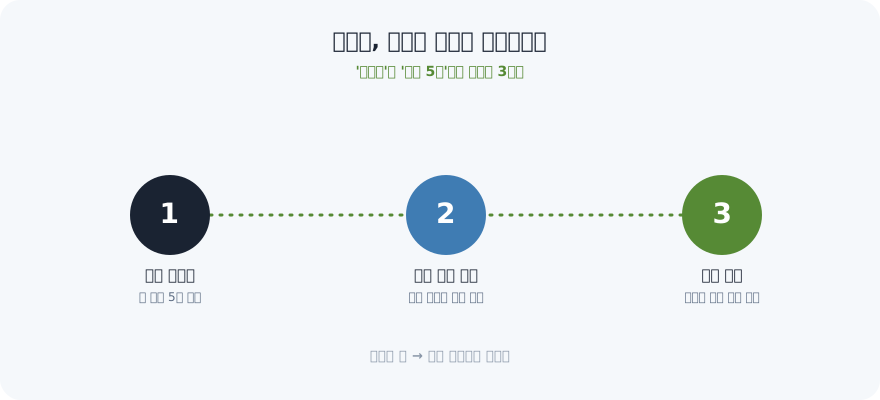
- Beat it with a system, not motivation: shrink the task, plan the recovery, design the environment
- The recovery rule matters most — one missed day shouldn't end the whole thing
- A vague "later" dies; a 5-minute task on today's list actually gets done
Why you procrastinate — it's your brain, not your willpower
Procrastination feels like laziness, but it's closer to fear. When a task is big, vague, or carries the risk of doing it badly, your brain flags it as a threat and reaches for instant relief — a phone, a snack, "I'll start tomorrow." That relief is real, which is why the loop is so sticky. (This is why beating plain laziness is really about lowering the emotional cost of starting, not summoning more grit.)
So the problem was never your character. It's that you kept attacking a brain-level avoidance response with a willpower-level tool. Change the tool, and the whole thing gets easier.
The system that beats procrastination — 3 parts
1. Shrink it until it's too small to avoid
Your brain resists "write the report." It doesn't resist "open the document and write one sentence." Shrink the task until the first step takes five minutes or less. The goal isn't to finish — it's to remove the wall between you and starting. Once you're moving, momentum does the rest. (These are the same small wins that quietly compound.) Give those five minutes a time and they get stronger still — that's why the 25-minute sprint block in time blocking works so well on tasks you've been avoiding. A task with no hour attached doesn't happen today, no matter how small you cut it.
2. Plan the recovery before you slip
Here's what actually ends most habits: not the missed day, but the spiral of self-blame afterward. You miss once, feel like a failure, and quit the whole thing. So decide the recovery rule in advance: one missed day is allowed, and you simply resume the next day — no guilt tax, no starting from zero. Missing once is an accident; missing twice is a pattern. Protect against the first so it never becomes the second. (This is the real antidote to three-day quitting.)
3. Design the environment so the right choice is the easy one
Willpower is unreliable; environment is not. Put your running shoes by the door. Leave the book on your pillow. Log out of the app that eats your evenings and move it off your home screen. You're not trying to be stronger than temptation — you're moving temptation out of arm's reach. Every bit of friction you delete from the good habit, and add to the bad one, is willpower you never have to spend. And once you've started, the next problem is staying — deep work shows how to protect a block so the task you finally began doesn't get interrupted into nothing. If you keep drifting inside that block, the three-layer sweep in how to improve focus is the environment design for your attention — most people clear the desk and forget the third layer, their own head.
Start today
The difference isn't discipline — it's design. Look at the two columns and notice that the right one never asks you to feel motivated.
| The procrastinating brain | A system |
|---|---|
| Waits to feel motivated | Starts with a 5-minute step |
| "I'll do it all later" | One tiny task on today's list |
| One slip = quit entirely | One slip = protected, resume tomorrow |
| Runs on willpower | Runs on environment |
How VisionDream turns this into a system you keep
The Today tab is built for exactly this. Put the shrunk-down, five-minute version of the thing you keep avoiding into your daily habits (part of the B·T·A — Belief, Thinking, Action) and check it off; the calendar heatmap turns each check into visible momentum you won't want to break. And because you get two streak protectors every month — used automatically when you miss a day — one slip never collapses the whole streak. The recovery rule is built in, so perfectionism can't quietly end your run.
So pick one thing today — just one — shrink it to five minutes, and write it down. Not the perfect plan; the smallest step you can repeat tomorrow. Plant your vision, and the fruit will come. 🌱
Frequently Asked Questions
Why do I procrastinate even on things I actually want to do?
Because procrastination isn't about laziness or how much you want the outcome — it's your brain avoiding the discomfort a task triggers. When something feels big, vague, or risky, your brain reaches for instant relief instead. That's why 'wanting it more' doesn't help; you have to lower the cost of starting by shrinking the first step.
How do I stop procrastinating without relying on motivation?
Build a system instead of waiting to feel ready. Shrink the task to a 5-minute first step, decide your recovery rule in advance (one missed day is fine — just resume the next), and design your environment so the good choice is the easy one. Motivation comes and goes; a system keeps working on the days you have none.
What should I do when I miss a day?
Resume the next day, and drop the self-blame. Missing once is an accident; the real damage comes from the spiral of guilt that makes you quit entirely. Decide in advance that one slip is allowed and doesn't reset anything. Missing once is an accident, missing twice is a pattern — protect against the first so it never becomes the second.
How does VisionDream help me stop procrastinating?
It turns the 'shrink it, plan the recovery, design the environment' system into a daily practice. You add the five-minute version of the task to the Today tab's habits and check it off, the calendar heatmap keeps your momentum visible, and two automatic monthly streak protectors mean one missed day never ends your run.
Plant a vision, and fruit will surely grow 🌱
Start in the app →Related posts
- 🌙The Evening Routine — Ten Minutes Tonight Decides Tomorrow Morning (4-Step, 10-Minute Checklist)
- 🌙How to Do a 5-Minute Daily Review — Stop Grading 'What You Didn't Do' (3-Line Format + Timebox)
- 📔Before You Buy a Planner — 3 Checks That Decide Whether You Finish the Year
- 📖How to Build a Reading Habit — No Finish-the-Book Guilt, a 3-Step System That Survives a Missed Day