Goal-Tracking Apps — How to Pick One and Actually Finish Your Yearly Goals
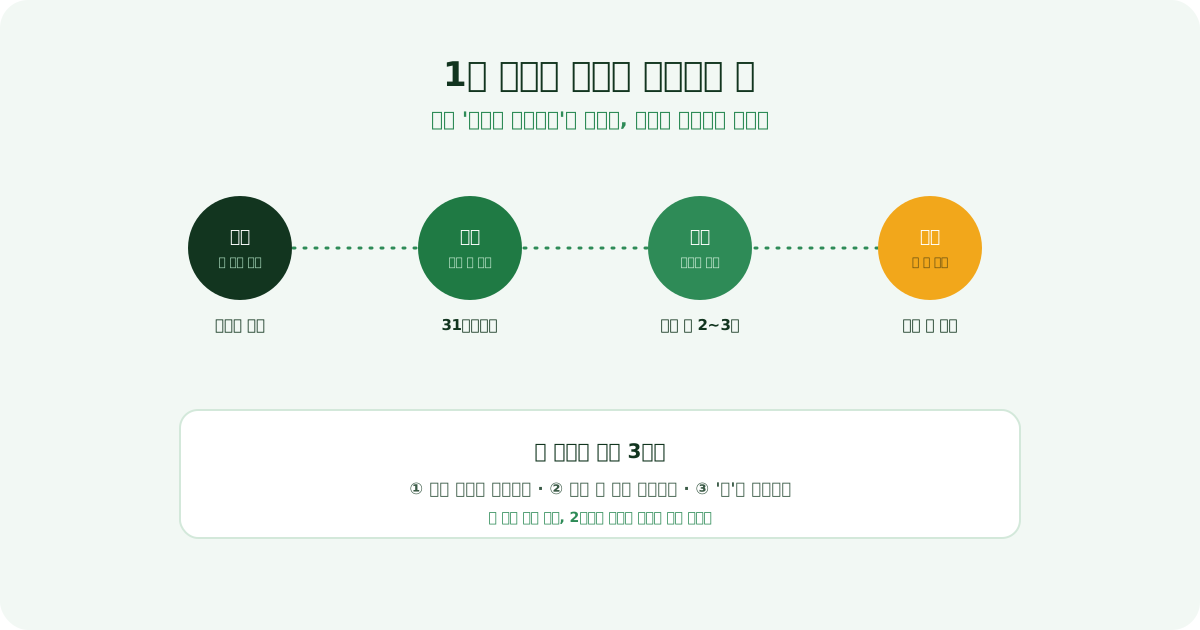
You've probably installed a goal app before. Maybe three. You set them up on January 1, felt organized for about a week, and then never opened them again. If you've quit ten goals this way, here's the one rule hiding behind all ten: the app never connected "this year" to "today." That's not a willpower failure — most goal apps are built to help you set goals, not finish them. So the real question isn't "which app has the most features," but "which app will still be open on a Tuesday in March."
Key takeaways
- Don't choose by feature list — choose by how your goal actually gets tracked (habit vs. number vs. purpose)
- Free is fine to start; what matters is whether the app survives the week you're too busy
- The real job is a ladder: annual → monthly → weekly → today — a yearly goal you can't act on today is already fading
- An app you actually open daily beats a "perfect" app you abandon by February
3 criteria for choosing a goal-tracking app
Forget the feature-count comparison — every app screenshots well. Ask three questions instead.
1. What kind of goal is this? A daily-reading habit and a "run a 10K by October" target need completely different tracking. Match the app to the goal, not the goal to the app (more on the two types below).
2. Will it survive a bad week? This is the one almost nobody checks before installing. Everything works when you're motivated. The app that lasts is the one that doesn't punish you the first time life gets in the way — one missed day shouldn't wipe a two-month streak, and an unfinished task should roll forward instead of vanishing.
3. Does it connect to why? A goal cut off from the reason behind it becomes a chore you'll quietly drop. If the app shows you the vision above the goal every day, skipping feels like drifting away from yourself — which is exactly the friction you want.
Habit-type vs. number-tracking — and the third kind most people miss
Most goal apps fall into two families. Habit-type apps are about repetition — check off "meditate," "read 10 pages," "no soda," and build a streak. They're perfect when the doing is the goal. Number-tracking apps are about a measurable outcome — weight, savings, kilometers, revenue — shown as progress bars and charts. They shine when there's a finish line with a number on it.
The trap is treating your whole year as one type. A yearly goal usually needs both: a number to aim at, and a daily habit that moves the number. That's the third, quieter category — purpose-linked tracking, where today's small action is visibly wired to the yearly goal and the vision above it. If your goal is still fuzzy, sharpen it first with SMART goal setting, then pick your tracking type below.
| Goal type | Best for | How it's tracked | What to check before you pick |
|---|---|---|---|
| Habit-type | building a daily routine | check-offs, streaks, calendar | Does a missed day break everything, or protect your streak? |
| Number-tracking | goals with a measurable outcome | progress %, charts, milestones | Does it split a yearly number into weekly targets? |
| Purpose-linked | finishing a 1-year goal | today's task connects up to the goal & vision | Can you see why you're doing it, every day? |
Annual → today: the ladder that keeps a goal alive
Here's what actually separates a finished goal from a January casualty: a yearly goal is too far away to act on today. You can't "do" a 12-month goal this afternoon. So the tracking that works is a ladder that shortens the distance until there's an obvious next step.
- Annual — one goal worth a whole year, tied to a vision you care about. (Building the full year? See the new-year plan system.)
- Monthly — the slice of that goal due this month, so "by December" becomes "by the 31st."
- Weekly — this week's two or three concrete actions. Close enough to actually do.
- Today — the single task in front of you right now, which quietly rolls up into the year.
The whole point of tracking is keeping that ladder visible so you're never staring at a vague yearly wish, only at today's doable step. This is the difference between setting a goal and managing one — and it's where most apps quit on you.
🌱 Tracking it in VisionDream
VisionDream is built for that ladder. The 4-level planner connects annual → monthly → weekly → daily in one line: each daily task links up to a higher goal automatically, you sort by A/B/C priority, and anything you don't finish rolls forward on its own instead of disappearing. Above it all sits the goal's vision, so you always see why. And the Success Tree turns your year into something you can watch grow — daily action becomes XP, a completed goal bears fruit, and each year adds a ring, so a full year of tracking is something you can actually see instead of guessing at.
Before you install anything, do this: think of one goal you quit last year, and write a single line — why did it stall? That one sentence is usually the criterion you were missing. Then pick the app that fixes it, and let today's task ladder back up to the year. Plant your vision, and the fruit will come. 🌱
Frequently Asked Questions
What's the best type of goal-tracking app for yearly goals?
It depends on the goal, but yearly goals usually need more than a simple habit checker or a number tracker on their own. The most reliable choice is a purpose-linked app that ladders your annual goal down to monthly, weekly, and daily steps, so a 12-month goal always shows up as one doable task today. Habit-type apps are great for routines and number-tracking apps for measurable outcomes — but a year-long goal typically needs both, connected.
Are free goal-tracking apps good enough, or should I pay?
Free is completely fine to start — the deciding factor isn't price, it's whether the app survives the week you're too busy. Look for two things: it doesn't punish a single missed day (streak protection, tasks that roll forward), and it connects today's action to the goal above it. An app you actually open daily beats a feature-packed paid app you abandon by February.
How do I connect a yearly goal to what I do today?
Use a ladder: annual → monthly → weekly → today. Take the one big goal for the year, slice off the part due this month, turn that into two or three concrete actions this week, and pull one clear task into today. Good tracking keeps that whole ladder visible, so you're never acting on a vague yearly wish — only on the next doable step, which rolls back up into the year.
How does VisionDream help track goals through the year?
VisionDream's 4-level planner links annual, monthly, weekly, and daily in one line — each daily task connects to a higher goal automatically, you prioritize by A/B/C, and unfinished tasks roll forward instead of vanishing. The Success Tree then makes the year visible: daily action becomes XP, a completed goal bears fruit, and each year adds a ring, so a full year of progress is something you can see rather than guess at.
Plant a vision, and fruit will surely grow 🌱
Start in the app →Related posts
- 🛰️What Is Dream Backcasting? Plan Backward from Your Future to Today in 5 Steps (30-Minute Worksheet)
- ✍️Writing Your Goal 100 Times a Day: Why It Dies on Day Three — And the 21-Day Ramp That Fixes It
- 🎯How to Set SMART Goals — One Sheet of Paper, 15 Minutes, 'Someday' Becomes 'Today'
- 🎯How to Set New Year's Goals — A 5-Step Annual Plan That Won't End as a Three-Day Resolution