How to Build a Habit Tracker — A Tool That Brings You Back, Not One That Demands Perfection
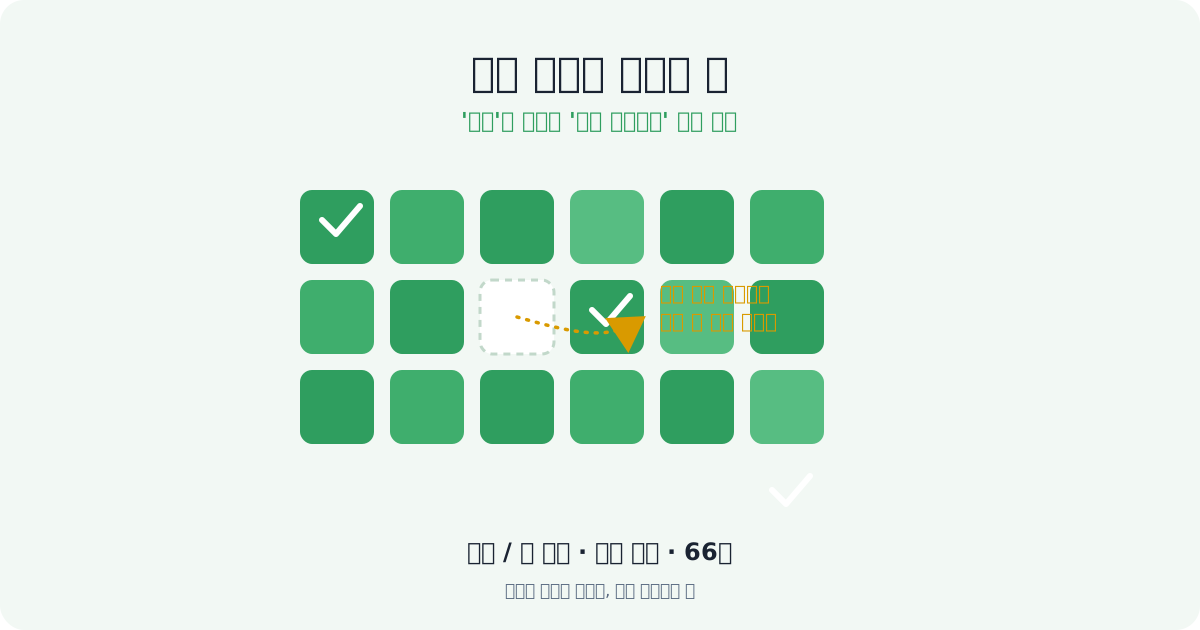
Here's what three weeks with a habit tracker taught me: the real power of a tracker isn't in keeping a flawless streak — it's in getting you to come back the day after you slip. Most people quit not because they missed once, but because that single blank box made the whole thing feel ruined. A good tracker is built for the opposite: to make a missed day a comma, not a period.
Key takeaways
- A tracker's job isn't perfection — it's pulling you back after a miss
- Track one habit, mark it done / not done, and keep it visible
- The rule that saves you: leave the missed box blank and just fill the next day
- Design for the long game — think in 66 days, not one unbroken chain
Why habit trackers usually fail
The typical tracker fails for a quiet reason: it rewards a perfect chain and punishes the first gap. You string together five green days, miss day six, and now the tracker looks broken — so you abandon it. The problem was never the missed day. The problem was a tool that treated one miss as total failure. (This is the same trap behind three-day quitting: the all-or-nothing mindset kills more habits than laziness ever does.)
A tracker should do the opposite of shame you. It should make the next entry the easiest thing in the world.
| Perfectionist tracker | Recovery tracker |
|---|---|
| One miss = the streak is "ruined" | One miss = a single blank box |
| Guilt makes you avoid it | Blank box invites you to come back tomorrow |
| Chases an unbroken chain | Chases showing up over 66 days |
| You quit after the first gap | You return the very next day |
How to build a habit tracker that survives a miss
1. Pick exactly one habit
Not five. One. A tracker with ten rows becomes a daily report card you'll grow to dread. Choose the single habit that matters most right now — "10 push-ups," "read one page," "lights out by 11." (Anchoring it to who you want to become makes it stick: see identity-based habits.) If you can't decide, start with "write tomorrow's first action" — it's step one of the 10-minute evening routine, takes thirty seconds a day, and changes the whole next day.
2. Make it binary — done or not done
No scores, no percentages, no "how well did I do." Just a box you fill or leave empty. Binary tracking removes the judgment that makes people quit. Did you do the thing, yes or no? Fill the box. That's the entire mechanic.
3. Leave the missed box blank — and fill the next day
This is the whole point. When you miss a day, do not cross it out, don't add a sad face, don't "make up" for it. Leave it blank and simply fill tomorrow's box. A blank square between two filled ones is invisible in a month. A guilt spiral is not. The rule is one sentence: miss a day, come back the next. (Every one of those small returns is a small win that rebuilds momentum.) If you are keeping the tracker on paper, this rule only works when the book has somewhere to mark a skipped day — one of the 3 checks to run before you buy a planner.
4. Design in 66 days, not a perfect chain
Research on habit formation points to roughly 66 days for a behavior to feel automatic — and crucially, that study found missing an occasional day did not derail the process. So build your tracker as a 66-day board, not a fragile unbroken chain. The goal isn't "never miss." The goal is to keep showing up across those two-plus months. (That patient, keep-going stance is exactly consistency over intensity.)
Example: two months, seven misses, still a win
Habit: "Read one page before bed." Month one: filled 24 of 31 boxes. Seven blanks — travel, a late night, a rough day. The old me: would have quit at the first blank in week one. The tracker me: left each blank alone and filled the next night. By day 66, reading a page felt automatic — and the seven misses were invisible.
Notice what happened: the misses didn't matter. The returns did. A tracker's value is measured not by its longest streak but by how quickly it pulls you back.
🌱 Do it with VisionDream
This is exactly how the Today tab in VisionDream works. Each day you check off your Belief, Thinking, and Action (your affirmation, your one thing, and your habit), and it fills into a calendar heatmap — a living habit tracker you can see at a glance. And here's the part built for missed days: VisionDream gives you two streak-protection passes every month, used automatically. Miss a day, and the app spends a pass so your streak stays alive — perfectionist collapse, prevented by design. The tool keeps you coming back; the main character is still you.
Start today. Track one habit for just three weeks. When you miss, leave the box blank and fill it again the next day. Plant the habit, keep returning, and the fruit will come. 🌱
Frequently Asked Questions
How do I make a simple habit tracker?
Pick one habit, mark each day as done or not done (binary — no scores), and keep it somewhere you'll see it daily. That's the whole system. The most important rule is what to do when you miss: leave that day's box blank and simply fill the next day, so a single gap never snowballs into quitting.
What should I do when I miss a day on my habit tracker?
Leave the missed box blank and fill in the next day — don't cross it out, add a guilt mark, or try to 'make up' for it. A blank square between filled ones disappears within a month; a guilt spiral makes you abandon the tracker entirely. Miss a day, come back the next. That single rule is what separates a tracker that lasts from one you quit.
How long does it take to build a habit?
Research points to roughly 66 days on average for a behavior to feel automatic, though it varies by person and habit. Importantly, that same research found that missing an occasional day did not derail the process. So design your tracker for the long game — showing up across 66 days — rather than chasing a fragile, unbroken chain.
How does VisionDream help with habit tracking?
VisionDream's Today tab lets you check off your daily Belief, Thinking, and Action, and fills them into a calendar heatmap you can read at a glance. It also gives two streak-protection passes each month, used automatically — so if you miss a day, the app keeps your streak alive and prevents the perfectionist collapse that makes most people quit.
Plant a vision, and fruit will surely grow 🌱
Start in the app →Related posts
- ⏰How to Stop Procrastinating — Break the Habit With Systems, Not Willpower
- 🌙The Evening Routine — Ten Minutes Tonight Decides Tomorrow Morning (4-Step, 10-Minute Checklist)
- 🌙How to Do a 5-Minute Daily Review — Stop Grading 'What You Didn't Do' (3-Line Format + Timebox)
- 📔Before You Buy a Planner — 3 Checks That Decide Whether You Finish the Year