How to Make a Career Vision Board — Skip the Pretty Photos, Fill In the Boxes (for Students & Job Seekers)
"I pinned a bunch of aesthetic photos, felt inspired for a day, and then it fizzled out." If that's your experience with vision boards, you're not doing it wrong — you're using the wrong kind for the job. A mood collage works fine for a dreamy Sunday feeling. But when you actually have to decide a career or land a job, a wall of pretty pictures tells you nothing about what to do Monday morning.
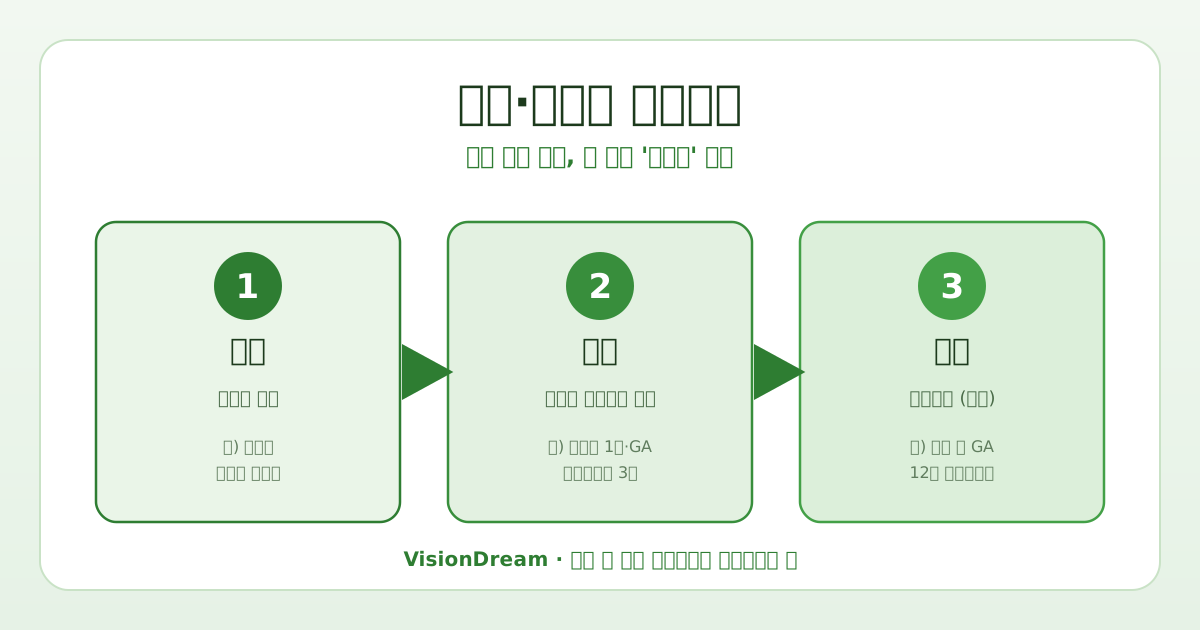
A career vision board is different. It's not decoration — it's a template with three boxes: the job, the skills, and the timeline. You fill each box with something concrete, and suddenly the board stops being a mood and starts being a map.
Key takeaways
- A career board isn't an aesthetic collage — it's a template you fill in
- Three boxes: Job (a specific role) → Skills (what that role demands) → Timeline (by when)
- Each box needs a concrete example, not a vibe ("marketer," not "success")
- Fill just one box today — the skill you want a year from now — and write it specifically
Why an aesthetic board fails for careers
A vision board is meant to keep your goal in view so your daily choices bend toward it. That works when the goal is already clear. But for career decisions, the goal is the fuzzy part — and pinning a photo of someone in a nice office doesn't clear the fog. (The visualization habit itself is solid; see how to build a vision board that works.)
The problem isn't the images. It's that a mood collage skips the three questions a career actually turns on: What role, exactly? What does that role require of me? By when do I need each piece? Answer those three and you have a career board that points at Monday morning.
| Vague career board | Boxed career board |
|---|---|
| "Success," "a good job," a nice-office photo | "Junior brand marketer at a consumer-goods company" |
| One dreamy vibe, no next step | Job / Skills / Timeline, each filled in |
| Can't tell if you're closer | Clear checkpoints: 3 months, 1 year, graduation |
| Inspires for a day | Tells you what to build this semester |
The three boxes of a career vision board
1. The Job box — a specific role, not a feeling
Write the actual role you're aiming at, as narrowly as you honestly can. Not "something in marketing" but "junior brand marketer at a consumer-goods company." Not "developer" but "front-end developer building web products." If you're truly undecided, put two or three candidate roles in the box — the point is to name real targets you can research, not to fake certainty.
2. The Skills box — what that role actually demands
Under the job, list the concrete skills and proof that role hires for. For a brand marketer: "run one real campaign, basic data analysis (GA), a portfolio of three writing samples." For a front-end developer: "one deployed personal project, JavaScript + React, a public GitHub." This box is the bridge from dream to action — each skill becomes a goal you can make SMART.
3. The Timeline box — by when, working backward
Put a date on each skill so the board has checkpoints instead of "someday." Anchor it to a real deadline — graduation, application season — and work backward. "Portfolio done by March, one campaign by summer, GA basics this month." (Working back from the deadline is exactly backcasting.)
What it looks like filled in
Meet Jia, a junior deciding her career. Job box: "Junior brand marketer (backup: content marketer) at a consumer-goods company." Skills box: "① Run one campus campaign · ② GA + basic Excel · ③ Portfolio of 3 pieces · ④ One internship." Timeline box: "GA this month → campaign by summer → portfolio by December → apply next spring."
Notice what happened: the same board that used to say "success" now says "learn GA this month." The dream didn't shrink — it got a first step. That's the whole difference between a board you look at and a board you live from. A digital version keeps it in front of you daily (here's how to make one on your phone).
🌱 Do it with VisionDream
This is exactly what the Dream Map in VisionDream is built for. You put one core vision sentence at the center — "become a marketer who moves people" — and around it sit your five life areas, with career and learning carrying your job and skill boxes. VisionDream generates an AI vision board image, tracks a progress bar for each area, and ties every skill to today's task, so your career board isn't a pretty wall — it moves. The tool is the app; the main character is still you.
Don't wait to have your whole future figured out. Fill just one box tonight — the skill you want a year from now — and write it as concretely as you can. Plant that one specific line, and the fruit will follow. 🌱
Frequently Asked Questions
What is a career vision board?
A career vision board is a goal-visualization tool built as a fill-in template rather than a mood collage. Instead of pretty photos, it has three boxes — the job you're aiming for, the skills that role requires, and the timeline for each — so it turns a vague career dream into concrete next steps.
How is a career vision board different from a normal one?
A normal vision board can be an aesthetic collage that captures a feeling. A career board has to answer three specific questions instead: what exact role, what skills that role demands, and by when. Each box holds a concrete example, so the board points at what to build this semester rather than just inspiring you for a day.
What do I write if I haven't decided on a career?
Put two or three candidate roles in the Job box instead of forcing one. The goal isn't fake certainty — it's naming real targets you can research and compare. As you fill in the Skills box for each, the roles that genuinely fit you become clearer, and you can narrow down from there.
How does VisionDream help with a career vision board?
VisionDream's Dream Map puts a core vision sentence at the center with five life areas around it — career and learning hold your job and skill boxes — generates an AI vision board image, and tracks progress. It ties each skill to today's habits and tasks, so your career board drives real action instead of gathering dust.
Plant a vision, and fruit will surely grow 🌱
Start in the app →Related posts
- 🖼️How to Make a Digital Vision Board on Your Phone (So You Actually See It Daily)
- 📲Goal-Tracking Apps — How to Pick One and Actually Finish Your Yearly Goals
- ⏰How to Stop Procrastinating — Break the Habit With Systems, Not Willpower
- 🌄5 Miracle Mindsets That Change Your Morning — Why Willpower Fails and What Works Instead