Reading for Action — Why Nothing Changes After You Finish the Book (5 Steps to Make It Stick)
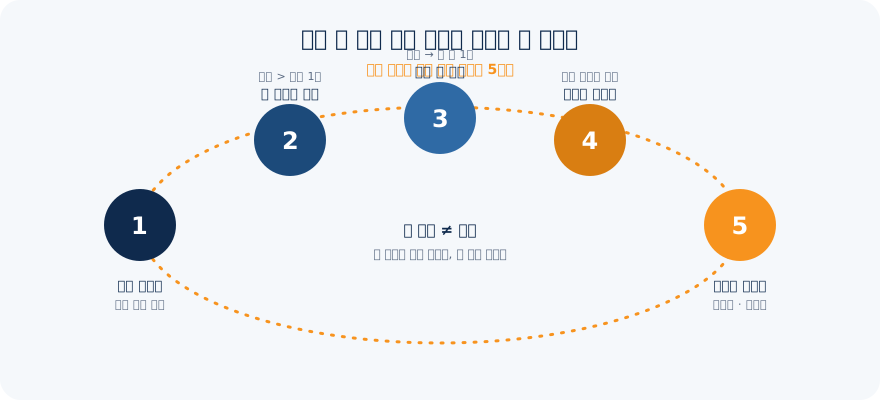
You've read twenty self-help books and your life looks the same — sound familiar? The problem isn't your willpower or the quality of the books. You simply mistook finishing for doing. When you close the last page, your brain hands you a reward: "done." But nothing actually changed. A book sticks not when you turn the final page, but when you turn one idea from it into action. What you need isn't faster reading — it's reading for action, a way to actually put what you read into motion.
Key takeaways
- Books don't stick because we mistake finishing for doing — completion was never the goal
- Reading with a question turns a book from information into an answer (and frees you from finish-anxiety)
- Pull exactly one thing from a book and translate it into one this-week action
- Attach that action to an existing habit, then log "did I do it?" in a weekly review
Why nothing changes even after you finish
If you define reading as "turning a book from cover to cover," then your measure of success becomes completion. So you skim pages you don't understand and close the last one feeling accomplished. But the reward your brain got is the sensation of "I finished a book" — not evidence that "I changed my life." Consuming information and acting on it are entirely different things. You can nod at a hundred sentences while you read, but if zero behaviors are different this week, the book hasn't stuck yet.
1. Read with a question — don't finish, solve
Reading for action starts before you open the book: pick one question. "What do I want to get from this?" — something specific, like "How do I stop hitting snooze every morning?" With a question, the book stops being a block to digest cover to cover and becomes a tool that answers your problem. Scan the table of contents and jump straight to the chapter that likely holds the answer. Completion isn't the goal. Once you find the answer to your question, the book has already done its job. This single shift releases you from the "if I don't finish it, I failed" anxiety.
2. Pull exactly one thing from each book
Underline thirty sentences and all you're left with is thirty underlines — none of them executed. The brain can't change several things at once. So when you close a book, ask: "If I take just one thing from this, what is it?" Choose the sentence that hit hardest, the one thing you can use in your situation right now. One executed idea beats ten shallow notes. It's fine to forget the rest — you can always reopen the book if you need it.
3. Translate the sentence into one this-week action
This is the heart of reading for action. If your one thing is an insight like "your morning routine decides your day," that's still a reflection, not an action. You must translate it into one concrete action you can do this week. "→ Starting tomorrow, drink a glass of water the moment I wake up." The translation has just two rules — within this week, and small enough that you can't fail. Without this step of turning insight into action, even the best book ends as a pleasant read and nothing more. (It's the same reason small wins beat willpower.)
4. Attach that action to an existing habit
Leave a new behavior floating in the air and it disappears within three days. Stack it on something you already do daily. "After I brush my teeth → read the one affirmation I pulled from the book." "While the coffee brews → write down one task for today." Using an existing routine as the trigger means the new behavior doesn't depend on memory. The moment the one thing you got from a book becomes a habit, that book stays in your life for good.
5. Log "did I do it?" in a weekly review
The last step closes the loop. Once a week, just ten minutes — check: "That action I pulled from the book last week, did I actually do it?" If yes, keep it running; if not, shrink it smaller. Without this weekly review, reading for action slides right back into "read and forget." The review isn't a judge, it's an adjustment — a time to choose what stays and what to drop.
How VisionDream makes what you read stick
The bottleneck of reading for action is always steps 3–5 — where you translate insight into action, attach it to a habit, and log it. VisionDream holds exactly this stretch for you. Register the one thing you pulled from a book as a goal or habit, and your daily habit check keeps that action running, while each check stacks as a leaf on your Success Tree — visible evidence that "this book stuck in my life." When the insight feels vague, the AI coach helps you translate: "What would this sentence look like as one action this week?" You do the reading; VisionDream helps you keep it.
A book doesn't stick by page count. It sticks by the one action you moved. Next time you open a book, don't aim to finish it — aim for one single action. Plant your vision, and the fruit will come. 🌱
Frequently Asked Questions
Why doesn't anything change even after I finish a book?
Because you mistook finishing for doing. Closing the last page gives your brain a 'done' reward, but consuming information and acting on it are entirely different things. One action you actually moved this week beats a hundred sentences you merely understood. Instead of aiming to finish, pull exactly one thing from the book and translate it into a concrete action you can do this week.
How do I start reading for action?
Start before you open the book by picking one question. A specific question like 'What do I want to get from this?' frees you from finish-anxiety and lets you jump to the chapter you need. Then pull exactly one thing, translate that insight into 'one action small enough that you can't fail, done this week,' attach it to an existing habit, and check 'did I do it?' in a weekly review.
Does speed reading help?
For changing your life, execution matters more than speed. No matter how fast or how much you read, nothing sticks if you don't move it into action. The 'slow execution' of choosing one thing from a book, making it one this-week action, and attaching it to a habit changes your life more than finishing twenty books. Measure your reading by actions moved, not pages read.
How does VisionDream help with reading for action?
Reading for action always breaks down at translating insight into action, attaching it to a habit, and logging it. VisionDream lets you register the one thing you pulled from a book as a goal or habit, keeps that action running through daily habit checks, and stacks each check as evidence on your Success Tree. When the insight feels vague, the AI coach helps translate it: 'What would this sentence look like as one action this week?'
Plant a vision, and fruit will surely grow 🌱
Start in the app →