How to Write a Bucket List — 100 Ideas and a Method That Actually Works
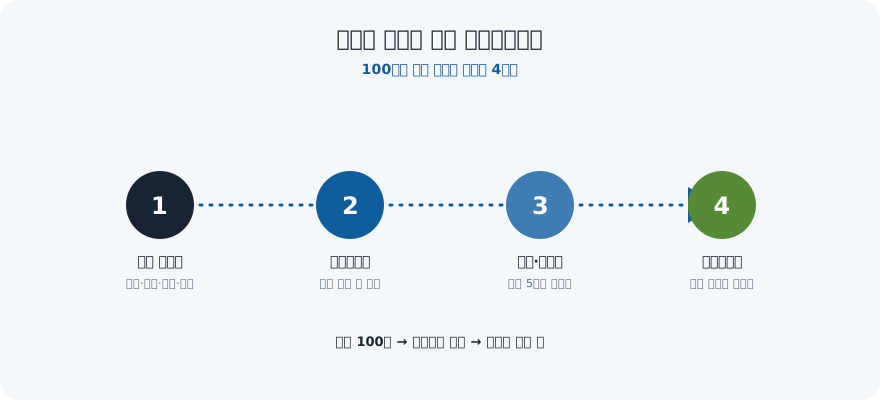
Most bucket lists die in a notes app after item number twelve. Not because you've run out of dreams, but because you ran out of a method. A good bucket list isn't a random pile of wishes — it's a map of the life you actually want, written wide enough to surprise you and concrete enough to act on. Here's how to write 100 of them without drying up, then turn the best ones into something today can touch.
Key takeaways
- A bucket list is a map of the life you want, not a to-do list
- Aim for 100 items on purpose — quantity unlocks the dreams you'd censor
- Split your life into areas so you never stare at a blank page
- A wish only matters once it becomes a dated, specific goal on your vision board
Why 100 — and why most lists stop at 12
The first ten items are easy: travel somewhere, learn an instrument, run a marathon. Then you stall. That stall is exactly the point. The dreams worth chasing usually live past the obvious ones — the things you'd quietly cross out because they feel too big, too late, or too "not me." Forcing yourself to reach 100 switches off that inner editor. You stop writing what's reasonable and start writing what's true.
You don't need 100 in one sitting. Open the list and add three this week, two next week. The number is a target, not a test.
| A vague wish | A bucket list item that works |
|---|---|
| "Travel more" | "Watch the northern lights in Iceland" |
| "Get fit" | "Finish a 10km race without walking" |
| "Learn something" | "Hold a 5-minute conversation in Spanish" |
| No way to know you did it | A clear, photographable moment |
Step 1 — Split your life into areas
A blank page is the enemy. Instead of "what do I want to do before I die," ask the question one area at a time. Use buckets like: travel, health & body, relationships, learning & skills, career & money, experiences & adventure, giving back, and creating something. Set a timer for five minutes per area and just dump. You'll hit 100 far faster than staring at one endless list — this is the same divide-and-fill move behind a vision board.
Step 2 — Make each item specific
"See the world" is a feeling, not a destination. Rewrite each line so you'd know, beyond argument, the moment you did it. Not "travel," but "stand at the top of Machu Picchu at sunrise." Not "be healthier," but "swim 1km without stopping." Specific items are the ones your brain can actually start on — and the ones worth a photo when they're done.
Step 3 — Give the important ones a deadline
A bucket list with no dates is a daydream. You don't need to date all 100 — pick the five that pull hardest this year and give each a when. The moment "someday learn to surf" becomes "catch my first wave by next summer," it stops being a wish and becomes a goal you can plan backward from. (That backward plan is exactly backcasting, and tightening the wording is what SMART goals are for.)
Step 4 — Move your top dreams onto a vision board
A list you never reopen does nothing. The dreams you've made specific and dated deserve to be seen daily. Move your top picks onto a vision board where they live next to your goals and habits — so a line like "run a half marathon" becomes a training habit you check off, not a sentence you forget.
How VisionDream turns your list into a life
This is where VisionDream comes in. Your bucket list isn't stranded in a notes app — each dream connects upward to your vision and downward to the goals and daily habits that get you there. Add "speak Spanish in Madrid," and the app helps you break it into a study habit you do today, tracks your streak on the success tree, and lets your AI coach nudge you when you stall. The list stops being a wish board and becomes the actual blueprint of your years.
So open a blank list and split it into areas. Write past the obvious twelve. Make the best ones specific, dated, and visible. Plant your vision, and the fruit will come. 🌱
Frequently Asked Questions
How do I write a bucket list?
Split your life into areas — travel, health, relationships, learning, career, adventure, giving back, creating — and brainstorm a few items per area with a five-minute timer. Then rewrite each line so it's specific enough that you'd know the exact moment you achieved it. Date the few that matter most this year, and move those onto a vision board next to your goals.
How many items should a bucket list have?
Aim for 100, but treat it as a target rather than a test. The first dozen come easily; pushing toward 100 switches off your inner editor and surfaces the dreams you'd normally censor for being too big or 'not you.' You don't need them all in one sitting — add a few each week and let the list grow.
What's the difference between a bucket list and a vision board?
A bucket list is the raw, wide collection of everything you want to experience — quantity first. A vision board is the curated, visual home for your top dreams, where they sit beside goals and daily habits so you see and act on them. The natural flow is bucket list first to dream wide, then move your best picks onto a vision board to make them real.
How does VisionDream help with a bucket list?
VisionDream connects each dream upward to your vision and downward to the goals and daily habits that achieve it, so a bucket list item like 'run a half marathon' becomes a habit you check off today. The success tree tracks your progress and the AI coach nudges you when you stall, turning a forgotten wish list into a living blueprint.
Plant a vision, and fruit will surely grow 🌱
Start in the app →Related posts
- 📲Goal-Tracking Apps — How to Pick One and Actually Finish Your Yearly Goals
- ⏰How to Stop Procrastinating — Break the Habit With Systems, Not Willpower
- 🖼️How to Make a Digital Vision Board on Your Phone (So You Actually See It Daily)
- 🌄5 Miracle Mindsets That Change Your Morning — Why Willpower Fails and What Works Instead