Self-Help Book Recommendations: The Order Matters More Than the List — A Two-Line Quadrant for Picking the Right One Now
There were twelve self-help books in my cart that year. I finished exactly none of them.
It wasn't for lack of a list. "30 books that changed my life." "What every successful person reads." Summary videos the algorithm kept handing me. Judging by my saved lists, I was extremely well read. Judging by my shelf — four books abandoned somewhere around page 25 — I was not.
The hard part of self-help book recommendations was never finding a list. It's picking the one book on that list of twenty that fits where you are right now. Lists are free and everywhere. Order is what nobody hands you. So we start over at book one, and we stop again at page 25. 🌱
Key takeaways
- A self-help book fails you not because it's bad but because its type doesn't match your current state
- There are four types — motivational, systems/method, mindset-shift, and biography/case — and each only works from a specific starting state
- Draw two lines and find your square first (do you have drive? do you have a method?)
- Most people should start with a systems book, not a motivational one — motivational books taken back to back become a habit in themselves
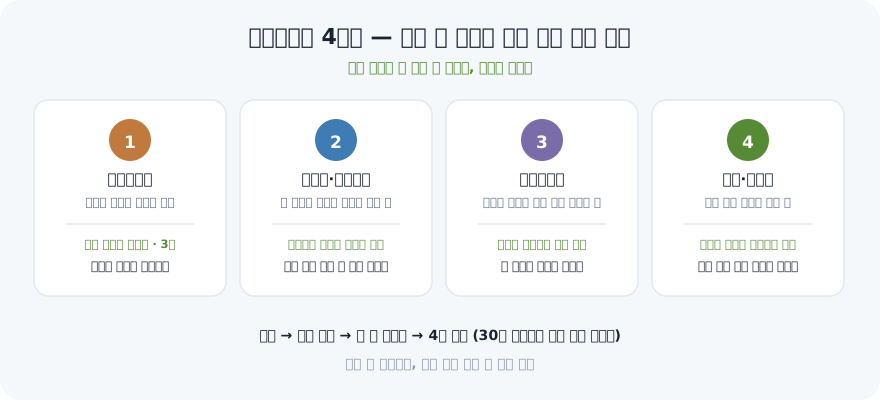
- A 30-minute test read, in five steps, removes about half your shortlist before you spend anything
- Finishing is structure, not willpower — a four-week plan (20 minutes a day, 10 pages in week one, one action in week two)
- One book you finish this month beats a list of twenty
What collectors of recommendation lists have in common
Collecting feels good. It feels like progress. But a list is also the most sophisticated way to postpone a decision. Save twenty books and you now owe yourself twenty decisions, and when there are twenty decisions a person makes none of them.
| The list collector | The order designer |
|---|---|
| Looks for "a great book" | Looks for "the book for me, now" |
| Feels safer as the shortlist grows | Feels safer as the shortlist shrinks |
| Uses the bestseller chart as the filter | Uses their current state as the filter |
| Starts several books at once | Opens one and closes the rest |
| Stops at page 25, moves to the next book | Stops at page 25, diagnoses why |
| 40 saved, 0 finished per year | 6 bought, 5 finished per year |
That last row is the whole article. Forty saved and zero finished is not a reading-volume problem, it's a selection problem. Endlessly gathering templates and lists while never starting is the same structure described in how to get past perfectionism: preparing so thoroughly that beginning never happens.
The four types — the book wasn't wrong, the pairing was
Treat all self-help books as one category and you will keep choosing badly. There are roughly four, and each one only pays off from a particular starting state.
| Type | What it actually gives you | Read it when | It backfires when | Typical titles |
|---|---|---|---|---|
| Motivational | A spark; the emotional energy to begin | You are flat out of drive and can't start anything | You're already doing the work — three hot days, then back to zero | The Miracle Morning, You Are a Badass |
| Systems / method | A procedure you can run today | You want to move but don't know how | You're completely depleted — the procedure reads as homework | Atomic Habits, The One Thing, Deep Work, Essentialism |
| Mindset shift | A frame for interpreting yourself | You know the method but "I'm just not that kind of person" keeps stopping you | It's your first book — the lines are good and they float past you | Mindset, Grit, Option B |
| Biography / case | Stamina and a longer sense of time | You're already working and losing patience with the pace | You read it before starting — you're left comparing, and smaller for it | Shoe Dog, Outliers |
Two mismatches account for most disappointment. Picking a systems book while running on empty, and buying another motivational book while already in motion. The first turns a good book into a chore. The second lets the excitement of reading pass for growth.
I did the second one for three years. Read it, burn hot, cool off in three days, buy another one. Eventually I wasn't buying books to read them. I was buying them to feel better for an evening.
The two-line quadrant — draw a cross and find your square
A cross on a scrap of paper is the entire diagnostic. Vertical axis: do I have drive right now? Horizontal axis: do I know what to do and how?
| I don't know the method | I know the method | |
|---|---|---|
| No drive | Square A — engine off. Exactly one motivational book, then straight to systems | Square B — self-doubt. Mindset shift (Mindset, Grit) |
| Have drive | Square C — spinning wheels. Systems and method (Atomic Habits, The One Thing) | Square D — stamina gap. Biography plus deeper practice |
Each square reads differently.
- Square A (no drive, no method). Read one motivational book. Two is a dosage problem. Don't add the next book to your cart before you finish this one, and the day you close it, move straight to a Square C book.
- Square B (no drive, has method). You aren't short on method; your reading of yourself is what's stopping you. Buy another how-to here and all you add is evidence for "I know and still don't do it."
- Square C (drive, no method). Most people searching for self-help recommendations are standing here. Buy a motivational book in this square and you are pouring fuel on a fire that's already lit — nothing changes.
- Square D (drive and method). What you need isn't a new book, it's time on the clock. Stretch your sense of duration with a biography, and if you want to upgrade how you read itself, a reading habit you can keep is the better next step.
The staged order — same five books, different result
Reorder the same five books and the outcome changes. Here is the four-stage order from Square C, the most common starting place.
| Stage | Goal | Type to read here | Examples | Signal to move on |
|---|---|---|---|---|
| 1 · Ignition | Hold one behaviour for 21 days | The thinnest systems book you can find | Atomic Habits | One thing you now do daily |
| 2 · Focus | Subtract commitments instead of adding | Systems (prioritisation) | The One Thing, Essentialism | You can write this week's one thing in a sentence |
| 3 · Depth | Raise the quality of focused time | Systems (attention, output) | Deep Work, Flow | Three uninterrupted 90-minute blocks a week |
| 4 · Endurance | Keep going across months | Mindset shift, biography | Mindset, Grit, Shoe Dog | A habit that has run six months or more |
The reason the order matters is simple. Skip stage 1 and read a stage 3 book, and every good line in it sounds like it's about someone else. Deep Work is explosive for a person who already has daily work to protect. For a person with no daily behaviour yet, it's a very well written book about strangers.
One more rule for stage 1: pick the thinnest book, not the most famous one. If you've never finished a 300-page book, the next 300-page book stops in the same place. Building the reading behaviour itself comes first, and how to build a reading habit that survives lays that out in three steps.
The 30-minute test read — kill half the shortlist before you pay
A bookshop shelf or a preview page is enough. Thirty minutes, in this order.
- Count the verbs in the table of contents (3 min). If more than half the chapter titles are actions — "how to", "designing", "building" — it's a systems book. Mostly nouns and adjectives means mindset shift. If the type doesn't match your square, stop here.
- Pick any chapter and read it to the end (10 min). Every book has a good introduction. Choosing on the introduction fails about half the time.
- Write one action you could take today from that chapter (5 min). If nothing comes, it isn't your book at this stage. That's not a verdict on the book — it means not yet.
- Check the repetition (7 min). Open three places at random and see whether the same message keeps returning. If 250 pages carry one idea, a summary is enough.
- Do the finishing arithmetic (5 min). Total pages divided by 10 pages a day equals days. Three hundred pages is thirty days. Buy it only if that number still sounds fine.
| Test-read result | Verdict | What to do |
|---|---|---|
| You wrote one action | Buy it now | Buy today, read the first 10 pages today |
| Good lines, but no action came | A later book | Send it to the wishlist and forget it |
| Three openings, same message | A summary will do | Replace with 30 minutes of reviews and summaries |
| Finishing arithmetic exceeds 60 days | Not right now | Find a thinner book on the same subject |
Steps 4 and 5 eliminate the most books in practice. Since I started using this filter, the number I buy dropped from about 18 a year to 6 — and the number I finished went up.
The four-week plan for finishing one book
Choosing well and then stopping at page 25 gets you nothing. Here's a 300-page book split across four weeks.
| Week | Daily amount | The job this week | Success looks like |
|---|---|---|---|
| Week 1 | 10 pages (about 20 min) | Underline only. No notes, no summaries | Opened the book on 5 of 7 days |
| Week 2 | 15 pages | Pick exactly one underlined thing to do, starting today | Ran that one thing for 3 days or more |
| Week 3 | 15 pages | Keep doing that one thing while you read. No new actions | The one action passed 10 days |
| Week 4 | Whatever remains | Close with three lines (learned, changed, discarded) | Wrote the summary before choosing the next book |
Week 2 is where it's won or lost. Underline ten things and none survive; pick one and that one survives. The moment you try to run several at once, the book quietly becomes a list again.
And missing a day doesn't end the plan. What ends plans isn't the day you skipped — it's the second consecutive day. If you want the reason a fixed seat and a fixed hour beat willpower here, why book clubs work and how to keep one alive makes the same case with other people in the room.
If you finished it and nothing changed
At that point it isn't a selection problem any more, it's what happens after reading. Briefly: what you take from a book is not ten insights, it's one behaviour you'll change this week. That transition has its own article — read reading that turns into action next. This piece is about what to pick and in what order; that one is about turning the book you picked into something you do.
🌱 Putting it into practice with the VisionDream app
The four-week plan runs inside the app as it is. Put "10 pages today" on the action check in the Today tab (Belief · Thought · Action) and the calendar heatmap shows you how many days you've strung together; promote the one action you chose in week 2 to the weekly One Thing in the planner and it stays in the same place all week. Miss a busy day and the streak protectors (two a month, applied automatically) keep the run alive, so one gap stops turning into a closed book. The app is the tool; you're the one doing it.
One thing to do today. Take the half-read book off your shelf and check which of the four squares it belongs to. Ten minutes is enough. If it was never a match for your square, the book did nothing wrong — the order did. Set it aside for now and start again with the one book that fits your square. Plant your vision, and the fruit will come 🌱
Frequently Asked Questions
Where do I start on a list of best self-help books?
Not at number one on the list — at number one for your square. Draw a cross on paper: the vertical axis is whether you have drive right now, the horizontal is whether you know the method. Mark yourself. If you have drive but no method (by far the most common square), the right pick is the thinnest systems and method book you can find, not another motivational one.
Don't all self-help books say the same thing?
They give different things. Motivational books give you emotional energy to start, systems books give you a procedure to run today, mindset-shift books give you a frame for interpreting yourself, and biographies give you a sense of how long things really take. If they've felt identical, you have probably been reading one type repeatedly. Motivational books back to back are the classic case: three hot days, then back to the starting line every time.
How can I tell whether a book is worth buying?
Thirty minutes decides it. First, count the verbs in the table of contents to identify the type. Second, read one chapter to the end, not the introduction. Third, try to write one action you could take today. Fourth, open three random places and see whether the same message repeats. Fifth, divide the page count by 10 pages a day to get your finishing date. If nothing comes at step three, it isn't a bad book — it's a book for a later stage.
Why not just read the bestsellers?
A bestseller is a book that sold well, not a book that fits you today. A classic on focus still reads like it's about strangers if you don't yet have a single daily behaviour to protect. Use the charts to assemble candidates, then make the final choice with the quadrant.
I always stop around page 25. How do I finish one?
Shrink the daily amount and fix the deadline. Week one is 10 pages a day, about 20 minutes, with no note-taking at all. In week two, pick exactly one underlined idea and start it. In week three, add nothing new and keep reading. In week four, close the book with a three-line summary. Missing one day is fine; the only rule is never missing two in a row.
Can I read several books at the same time?
Not if you have no finishing record yet. Open three at once and all three usually stop around page 25. Once you've completed the four-week plan a couple of times, running two books of different types — say one systems book and one biography — is reasonably safe. Two books of the same type simply crowd each other out.
Plant a vision, and fruit will surely grow 🌱
Start in the app →Related posts
- 📚Lee Dong-jin's Reading Method — He Doesn't Read to 'Get Things Done,' So Why Does It Still Change His Life? (4 Steps to Copy It)
- 📚Why Book Clubs Quietly Die in 3 Months — And the 6-Week Blueprint for One That Lasts
- 📲Goal-Tracking Apps — How to Pick One and Actually Finish Your Yearly Goals
- ⏰How to Stop Procrastinating — Break the Habit With Systems, Not Willpower